Wall Hung Vanity Units: Will Your Wall Hold One?
Bathrooms
Short answer: most walls will hold a wall hung basin vanity unit, but only if you fix it to something solid and use the right fixings for what you’re drilling into. A loaded unit is heavier than people expect, so the wall behind it does the real work. Get the fixings wrong and it will pull away from the plaster, usually at the worst possible moment. This guide is about the fitting side, so wall types, fixings, height, pipework and weight, not which style looks nicest.
If you’re still deciding between a floating unit and one that sits on the floor, that’s a separate question and we cover it in our guide to wall-hung vs floor-standing bathroom furniture. This post assumes you’ve picked wall-hung and now you want to know if your wall can take it. For the wider picture on sizes, styles and storage, start with our wall-hung vanity units guide.
- Wall types and the fixings each one needs
- What the unit actually weighs when it’s in use
- What height to hang it
- What’s hiding in the wall before you drill
- When to walk away from wall-hung
- FAQ
Wall types and the fixings each one needs
Before you buy anything, work out what your wall is actually made of. Knock on it. A solid, dull thud usually means masonry. A hollow, drum-like sound means it’s a stud wall with a plasterboard skin. This one test changes everything about how you fix the unit, because the wall is what’s holding the weight, not the bracket.
There are three common walls you’ll be dealing with in a UK bathroom:
- Solid masonry (brick or block, often with a plaster skim). The strongest of the three. You drill into the masonry itself and use proper wall plugs or resin-set fixings rated for the load. This is the ideal wall for a heavy stone-cast basin unit.
- Timber stud with plasterboard. A timber frame with a plasterboard face. Plasterboard on its own holds almost nothing, so the trick is to hit the timber studs behind it and screw straight into solid wood. Fixings that only grip the board will fail under a loaded unit.
- Dot-and-dab plasterboard. Plasterboard stuck to a masonry wall with blobs of adhesive, leaving a hollow gap behind the board. This is the sneaky one. It sounds hollow like a stud wall, but there’s brick behind it. You need a fixing long enough to pass through the board and the cavity and grip the masonry, otherwise you’re only holding onto the board.
The fixing you choose has to match the wall, and it has to be rated for the weight of a loaded unit. This is not the place for whatever’s left in the drawer. The exact fixing type and load rating depend on your specific wall and the unit’s weight, so it’s the one thing worth checking against the manufacturer’s fitting instructions and, if you’re not sure, a fixings supplier who can size it for the load. Fitting a wall hung sink unit onto the wrong fixing is the single most common way these jobs go wrong.
A quick word on dot-and-dab, because it catches people out. The gap behind the board means a short screw and plug will just spin in the cavity. You want a fixing that anchors in the masonry behind, and you want to pull the unit tight to the board so it isn’t hanging off the plasterboard edge. If in doubt on a dot-and-dab wall, treat it as masonry for the fixing depth and stud-wall-cautious for the surface.
What the unit actually weighs when it’s in use
Here’s the bit people underestimate. It’s not the empty unit weight that matters, it’s the whole lot together once it’s plumbed in and someone’s leaning on it. Add up the cabinet, the basin, the water sitting in the basin and the trap, the tap and waste, and the very real force of a person putting their weight on the front edge to brush their teeth. That last one is the big one, because it’s a leverage load pulling the top of the unit away from the wall.
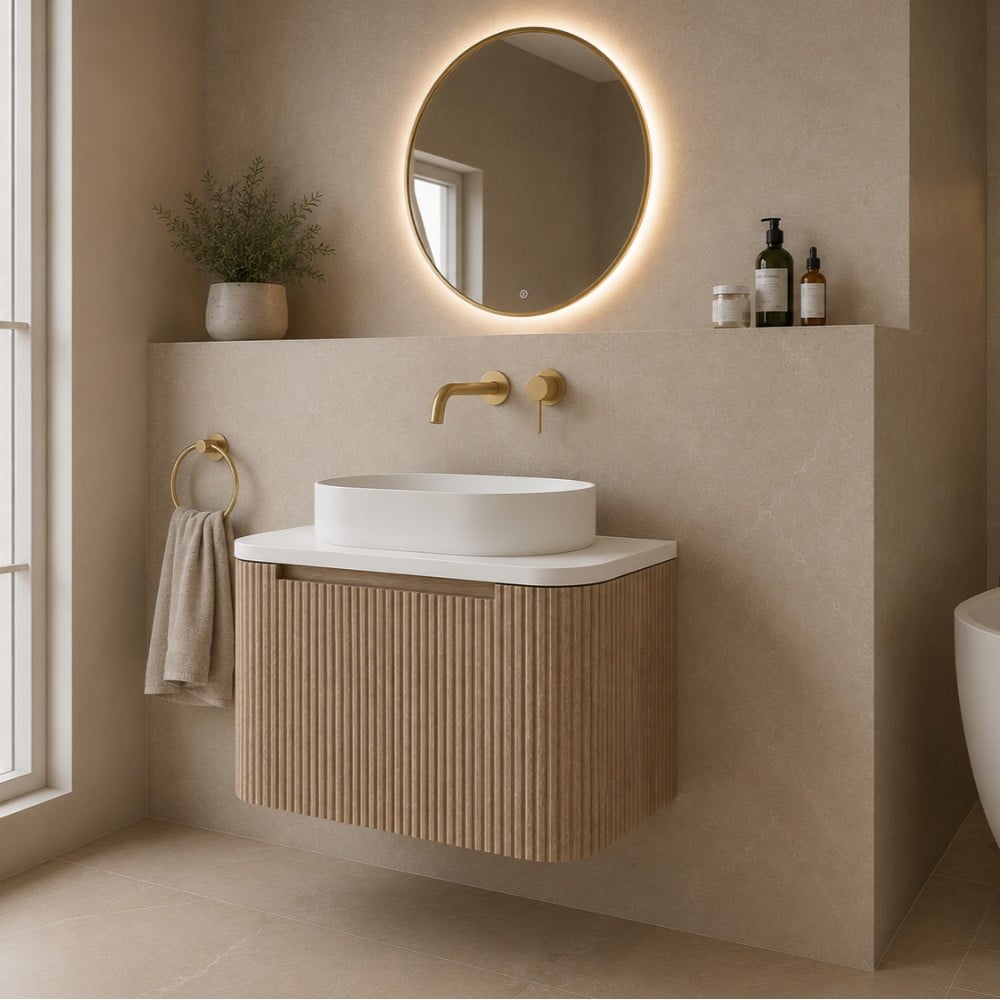
Stone-cast basins are where this gets serious. A stone-cast basin is dense and heavy compared to a thin ceramic one, which is exactly why it feels solid and looks the part, but it also means the wall behind it is carrying more. The Linea Curve 900mm Sonoma Oak wall mounted vanity unit (£449.99) is 880mm wide and 500mm deep, pairing a broad cabinet with a stone-cast top, so it’s a good worked example of a unit where the wall really has to earn its keep. The smaller Linea 600mm Sonoma Oak unit (£399) drops to 580mm wide, so it’s lighter simply because there’s less of it, but a stone-cast basin still isn’t featherweight. Both come in Black, Reed Green or Sonoma Oak if you want to match the rest of the room.
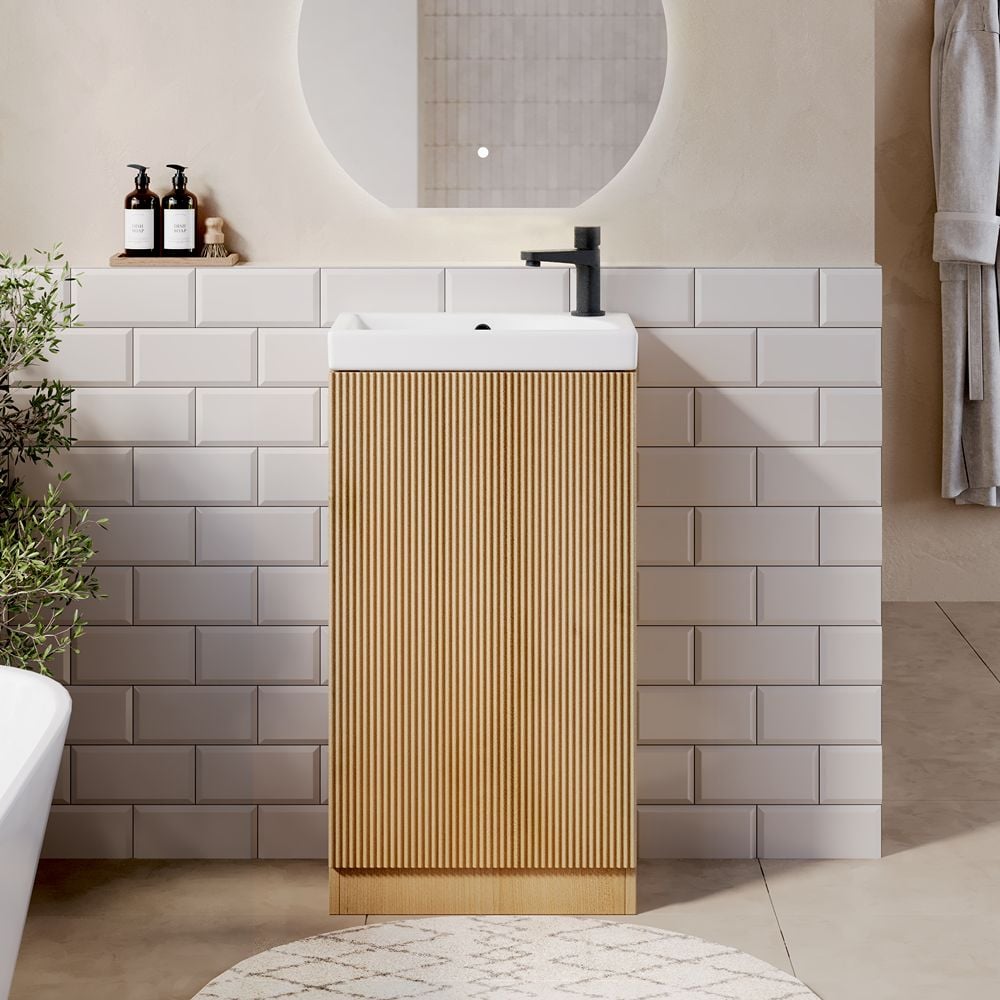
The honest answer on exact kilos is: check the product spec for the unit you’re buying, because it varies a lot between a slim 600mm cabinet and a wide double-drawer 900mm one. What matters more than the headline number is that you fix into something that can take the load and the leverage, not just the static weight. If you want lighter to start with, a slimmer unit and a lighter basin is a sensible first wall-hung project. The Blake 800mm Dust Grey wall hung vanity unit (£229) is a single-drawer floating unit that keeps things simpler, and the Alfie 600mm Fluted Sonoma Oak unit (£299) is a compact option for a cloakroom or a small bathroom, at 580mm wide and only 389mm deep so it doesn’t eat into the room, with a soft-close drawer and a lifetime guarantee.
You can see the full range of wall-mounted bathroom furniture to compare unit sizes, and if you already have a unit and just want to hang a basin on its own, the wall-hung basins range is the place to look.
What height to hang it
There’s a comfortable range for basin height rather than one magic number, and the honest way to set it is to hang it for the people who’ll actually use it. The standard finished basin rim height most fitters work to sits in a common range, but the right figure for you depends on who’s using the bathroom, so measure it against the people in your house before you drill.
Deviate from the standard when it makes sense:
- Tall household. Hanging a touch higher saves everyone stooping. One of the quiet advantages of a wall hung unit is you get to choose, so use it.
- Children. If it’s a family bathroom, lower is kinder, or fit a step. Don’t hang it to suit an adult and expect a five-year-old to reach.
- Accessible bathrooms. If someone uses a wheelchair or needs to sit to wash, the height and the clear space underneath both matter, and there are specific figures and clearances to work to. That’s worth getting right rather than guessing, so check the current accessibility guidance for your situation.
Whatever height you land on, mark a level line across the wall and work to it. A basin that’s fitted a few millimetres off level is obvious the moment water pools to one side of the bowl.
What’s hiding in the wall before you drill
Never drill a bathroom wall blind. Behind the plaster you can have hot and cold feeds, a soil pipe, and cables running to a shaver socket, an extractor fan or the lights. Hitting any of those turns a Saturday job into an expensive emergency.
Before a single hole goes in:
- Use a pipe and cable detector across the whole area you’re fixing into, not just where the bracket lands. Mark what you find.
- Think about where the existing services run. Pipes and cables tend to run vertically up from sockets and taps and horizontally across from them, so treat those zones as suspect.
- Plan the waste and the feeds before you commit. On a wall hung unit the waste and the hot and cold feeds usually route down and back behind the cabinet so they’re hidden, which is half the appeal of the floating look. Work out whether your existing pipework comes out of the wall or up from the floor, because that decides how the unit sits and whether you need to move anything.
If your pipes currently come up from the floor and you want the clean floating look with everything hidden, that often means moving the feeds and waste into the wall. It’s doable, but it’s a bigger job, so factor it in before you fall in love with a unit that assumes wall-fed pipework.
When to walk away from wall-hung
Wall-hung isn’t right for every wall or every home, and there’s no shame in choosing the unit that suits your situation. Walk away from wall-hung when:
- The wall is weak or you’re not sure what’s behind it. A tired stud wall with old, crumbly board, or a partition that flexes when you push it, is not a wall to hang a stone-cast basin on. If you can’t fix into something solid, don’t.
- You’re renting. Wall-hung means big fixings and hidden pipework, which is a lot of making-good when you leave. A freestanding unit you can take with you makes more sense.
- You want the job simpler. A floor-standing unit carries its own weight down to the floor, so the wall fixing is doing far less work. It’s the more forgiving option if you’re not confident about the wall.
If any of those apply, a floor-standing unit is the sensible fallback, and you can browse the floor-mounted bathroom furniture range instead. You lose the floating look and the easy-to-clean floor underneath, but you gain a much more forgiving fit. For the full trade-off between the two, our wall-hung vs floor-standing bathroom furniture guide lays it out.
FAQ
Can I fit a wall mounted sink unit to a stud wall?
Yes, but you have to fix into the timber studs, not the plasterboard. Find the studs, screw straight into solid wood with fixings rated for the load, and if the studs don’t line up with where you want the unit, you may need to fit a timber noggin or a batten between them to fix to. Plasterboard on its own will not hold a loaded unit.
Is a floating sink strong enough to lean on?
A properly fitted floating sink handles normal everyday use, including someone leaning on the front edge, because that leverage load is exactly what the fixings are chosen for. The strength comes from fixing into a solid wall with the right fixings, not from the unit itself. Skimp on the wall or the fixings and no unit will feel solid.
How does a suspended bathroom sink hide the pipes?
On a suspended bathroom sink the waste and the hot and cold feeds usually route down and back into the wall behind the cabinet, so nothing shows below. That clean look depends on your pipework coming out of the wall rather than up from the floor. If your feeds currently rise from the floor, expect to move them to get the fully hidden finish.
What’s the difference between a wall hung sink and a wall hung vanity unit?
A wall hung sink is just the basin fixed to the wall on its own or on a bracket. A wall hung vanity unit is a basin plus a cabinet underneath for storage, both hung off the wall together. The vanity unit gives you somewhere to hide the pipes and stash the clutter, which is why most people fitting a floating look go for the unit rather than the bare basin.
You might also find these useful. If space is tight, our guide to how to design a small bathroom covers where a wall-hung unit earns its keep by freeing up the floor. And if you’re still weighing up floating against floor-standing, the wall-hung vs floor-standing bathroom furniture guide runs through the trade-offs before you commit.