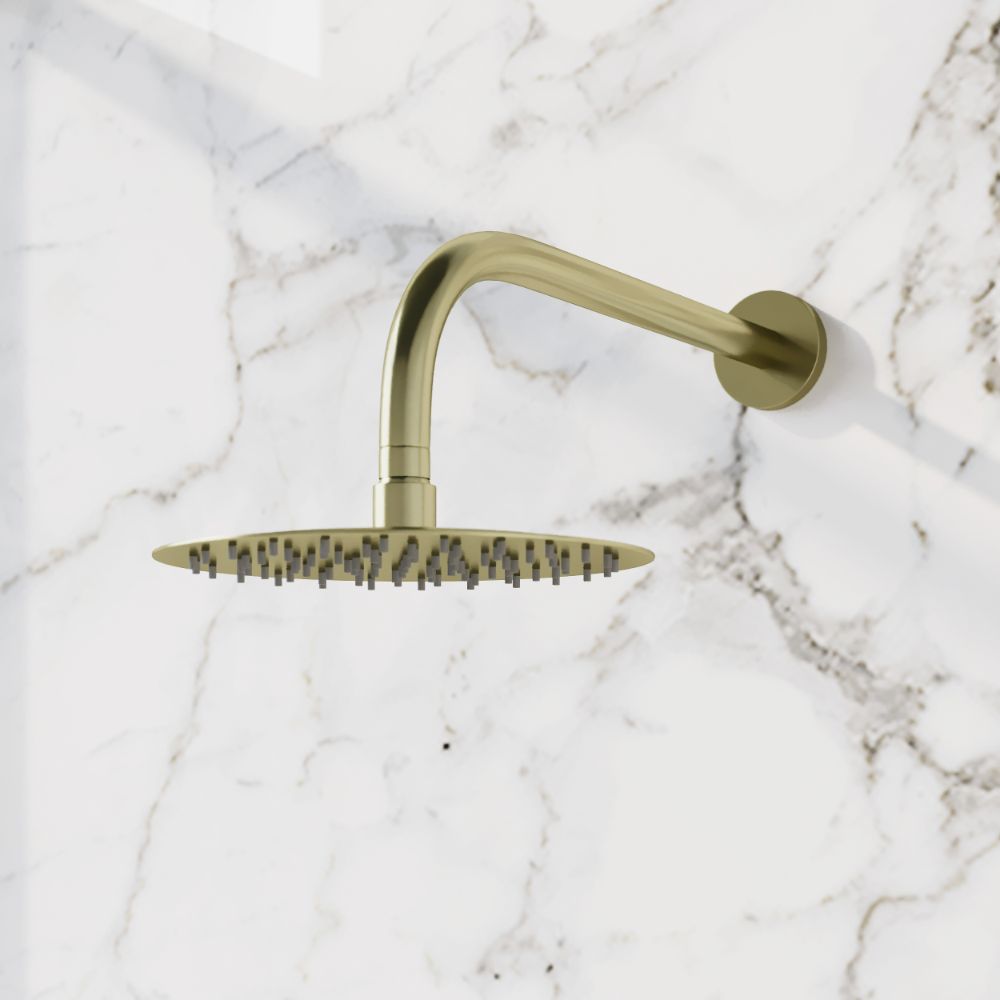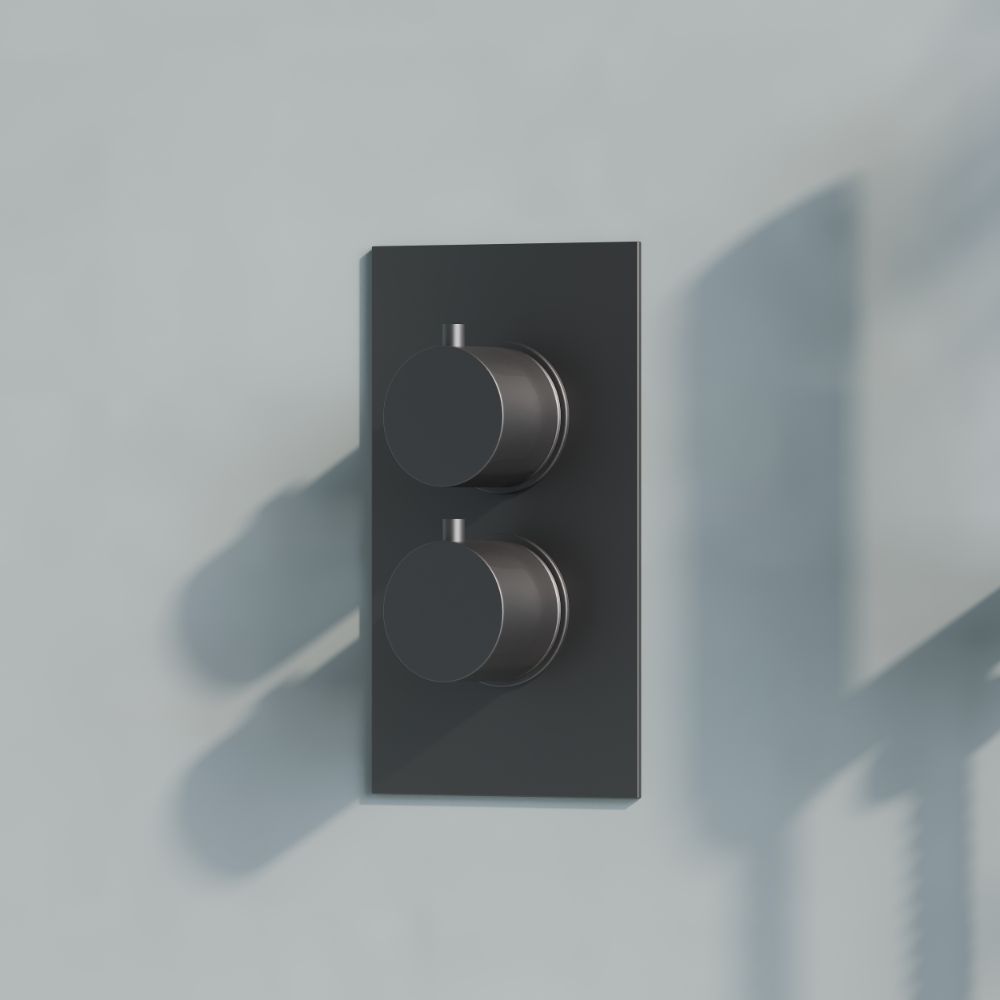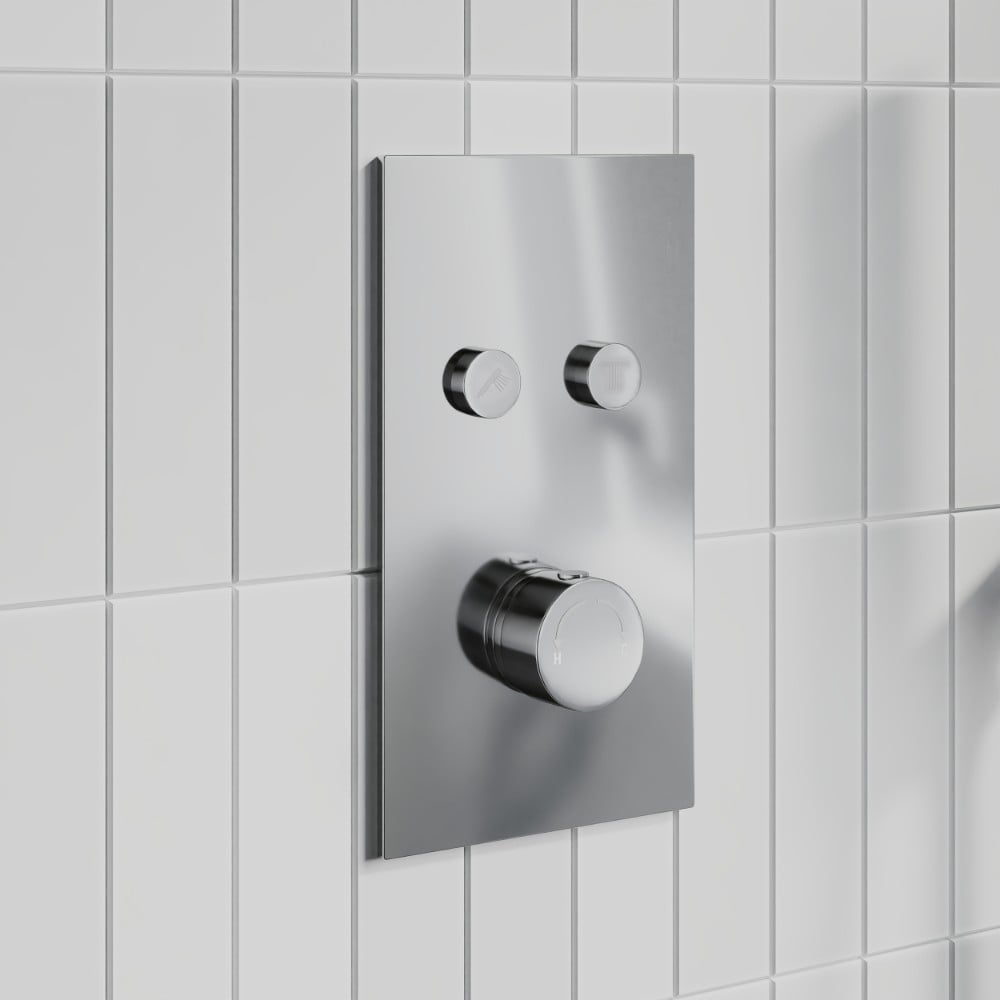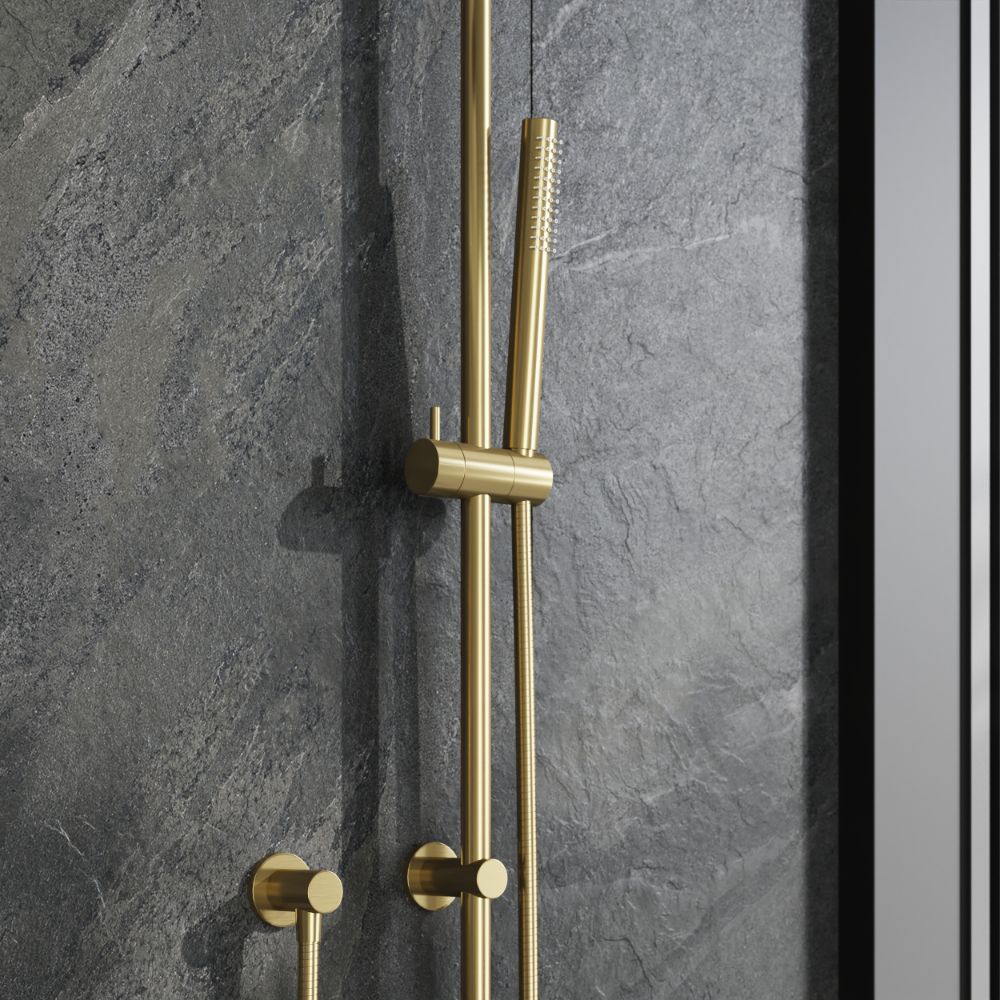

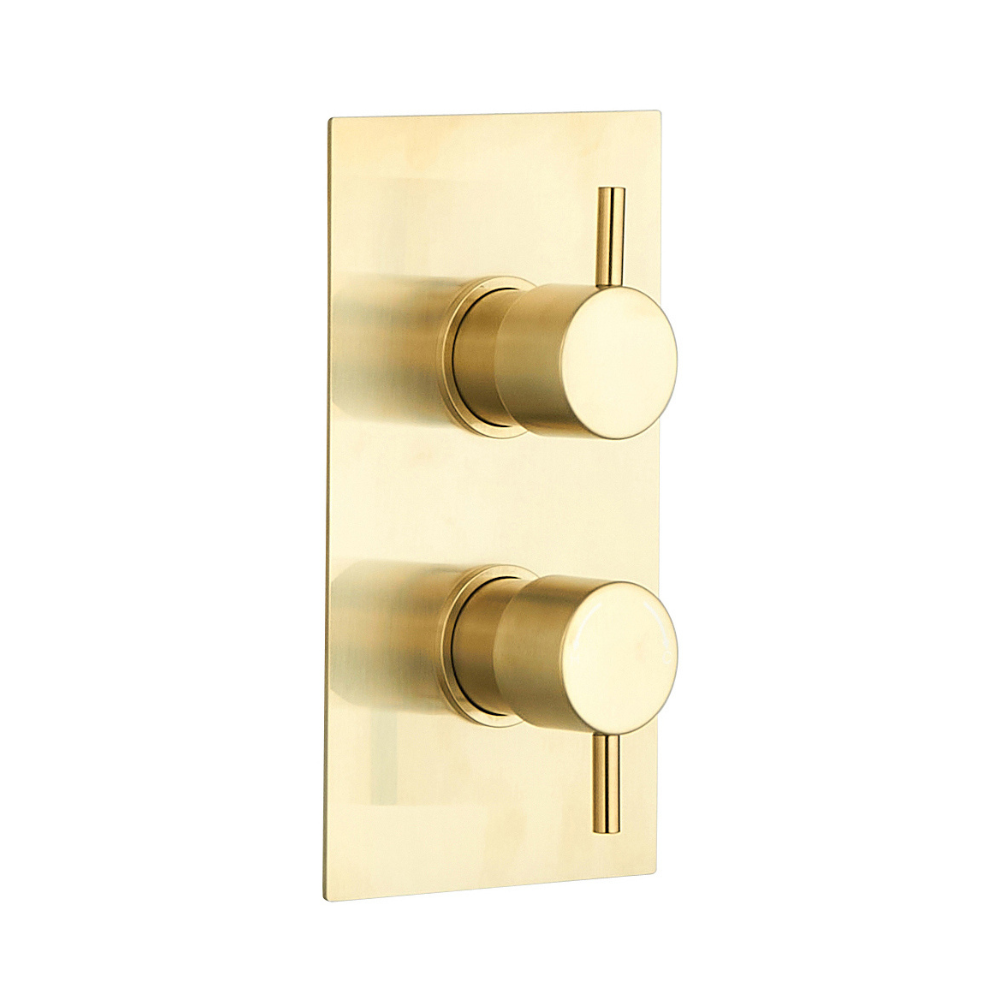
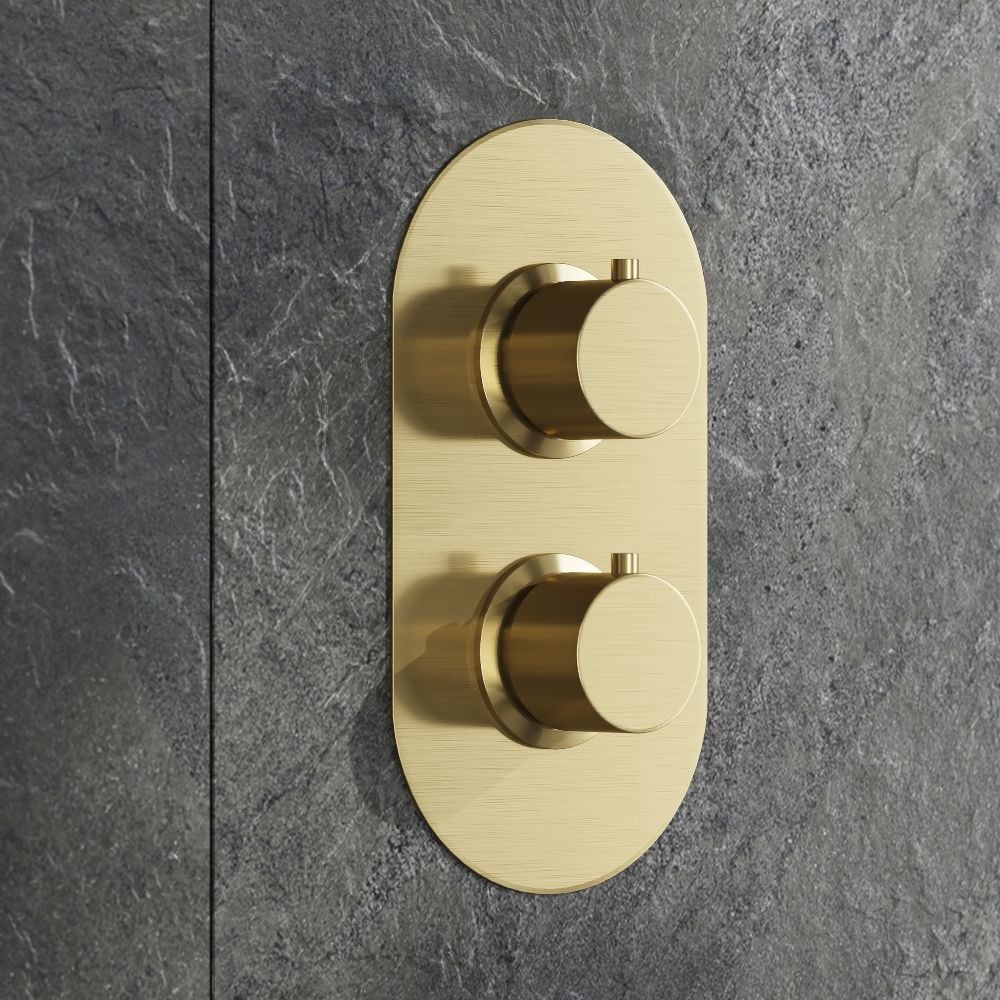
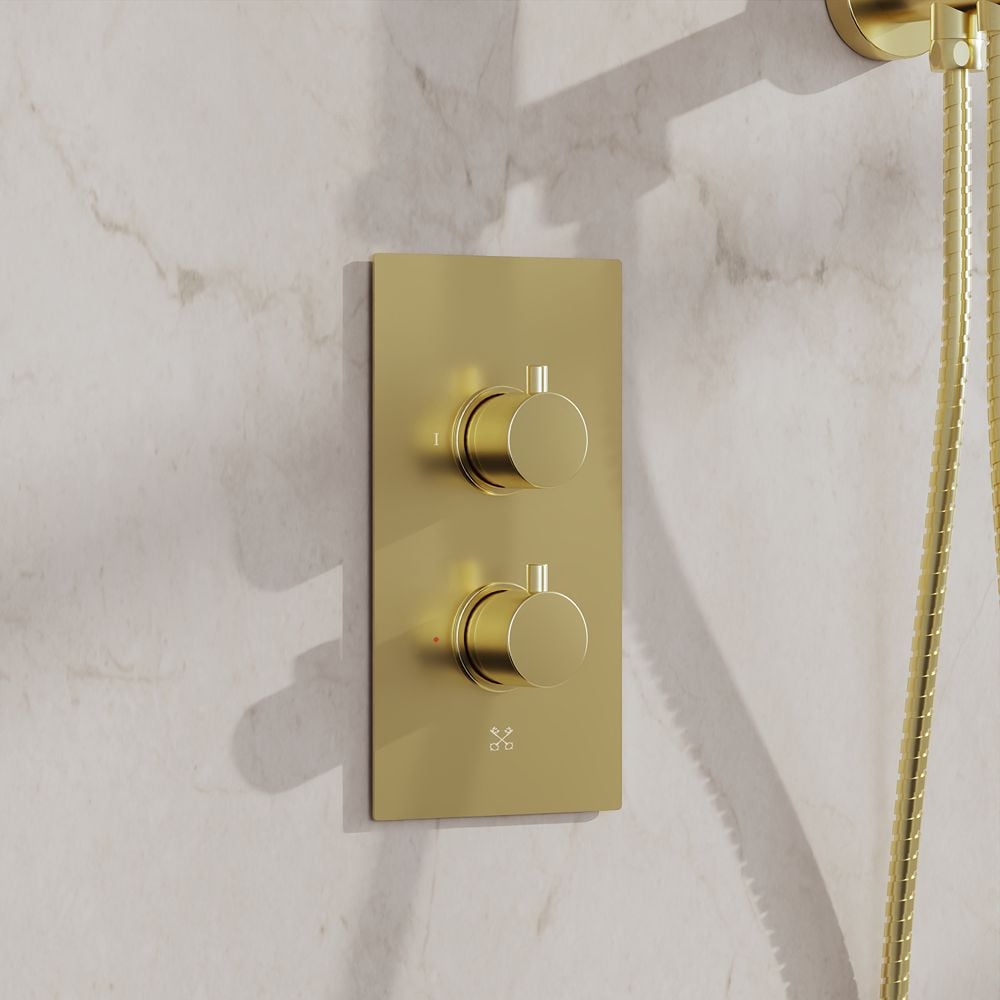
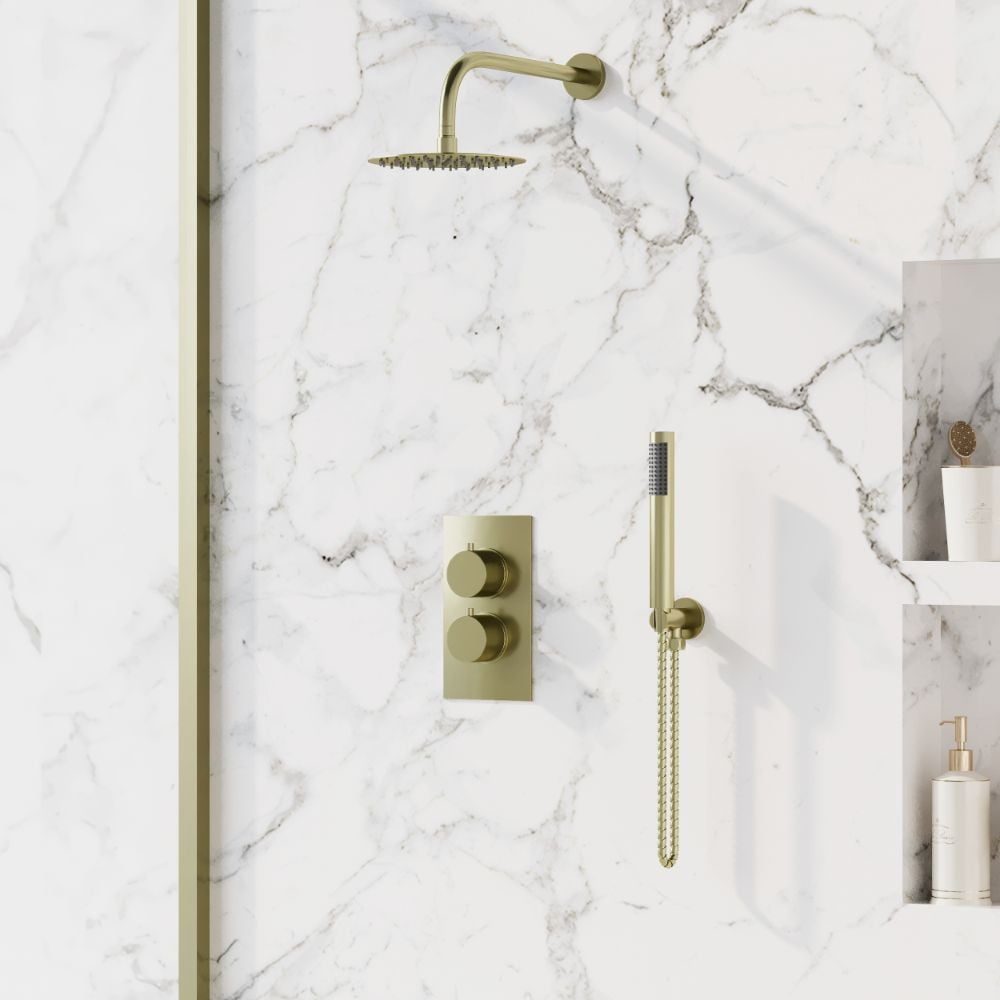
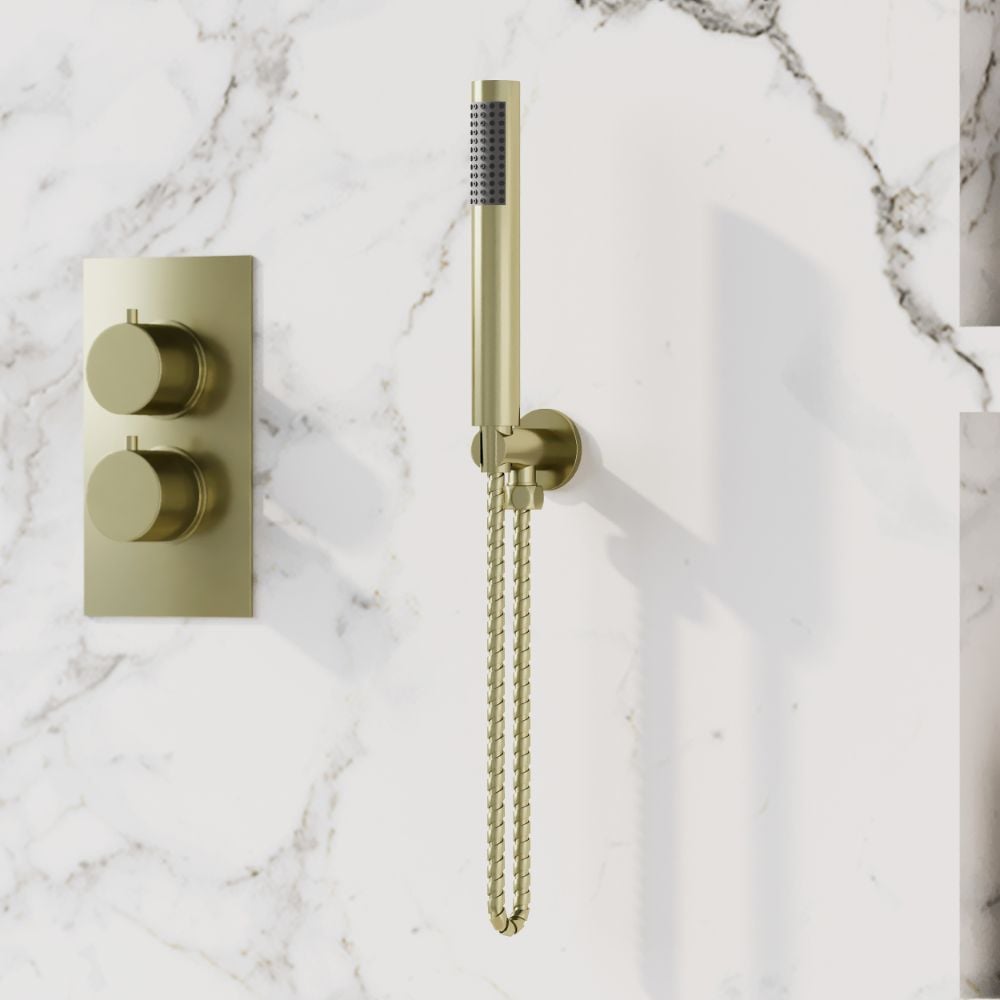
Brushed Brass 2 Handle 2 Outlet Thermostatic Concealed Shower Valve – Round
RRP: £210.81
£119.00
RRP: £210.81
£119.00


£30 off £500+ (Code: AUT2630OFF) • £100 off £1000+ (Code: AUT26100OFF) • £200 off £2000+ (Code: AUT26200OFF)
A concealed shower valve is the control unit that sits buried in the wall, so all you see on show is the handle (or handles) and a clean tiled finish, with the pipework hidden behind. The big decision is how many outlets you need: one outlet runs a single shower head, two outlets let you switch between, say, a fixed head and a handset, and three outlets add a body jet or bath filler into the mix.
Every valve picked out in the guide below is thermostatic, which holds your set temperature steady so you are not scalded when someone flushes the loo. Pick your outlet count and your finish, then work through the buying guide and the quick answers that follow.
Concealed (sometimes searched as “recessed”) just means the valve body is hidden in the wall rather than sitting on the surface. It looks tidy and high-end, but the trade-off is honest: it is a more involved fit than a surface-mounted bar valve, because the body has to be set into the wall and the pipework chased in behind it. If you are doing a full re-tile or a new build, that is no problem. If you are swapping like-for-like onto an existing surface valve, factor in the extra work.
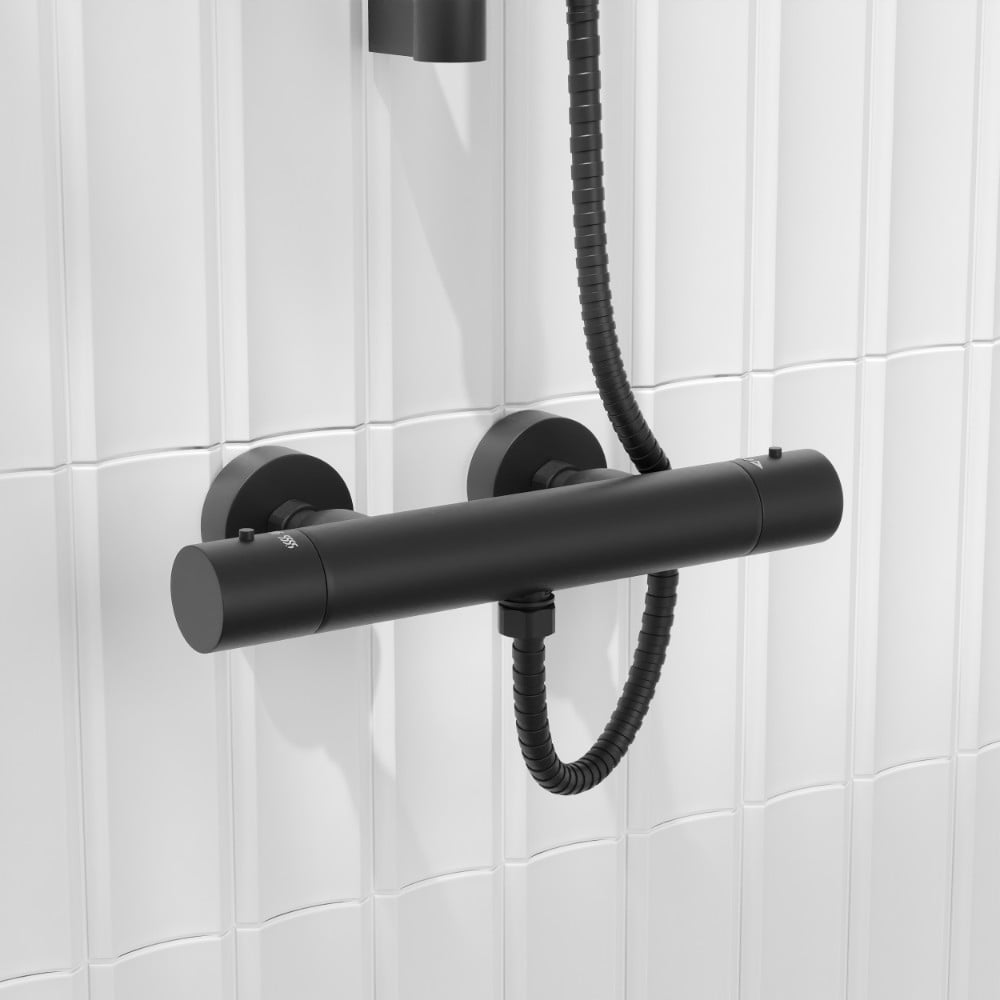
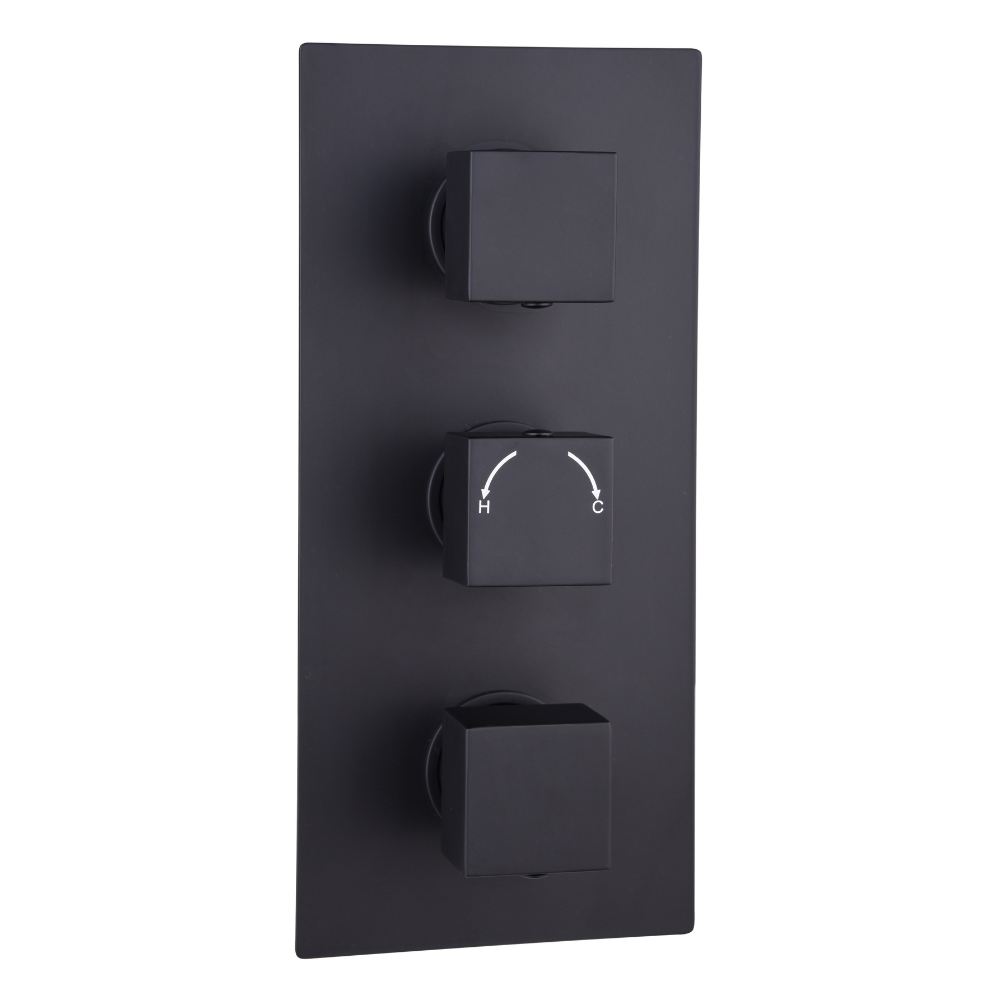
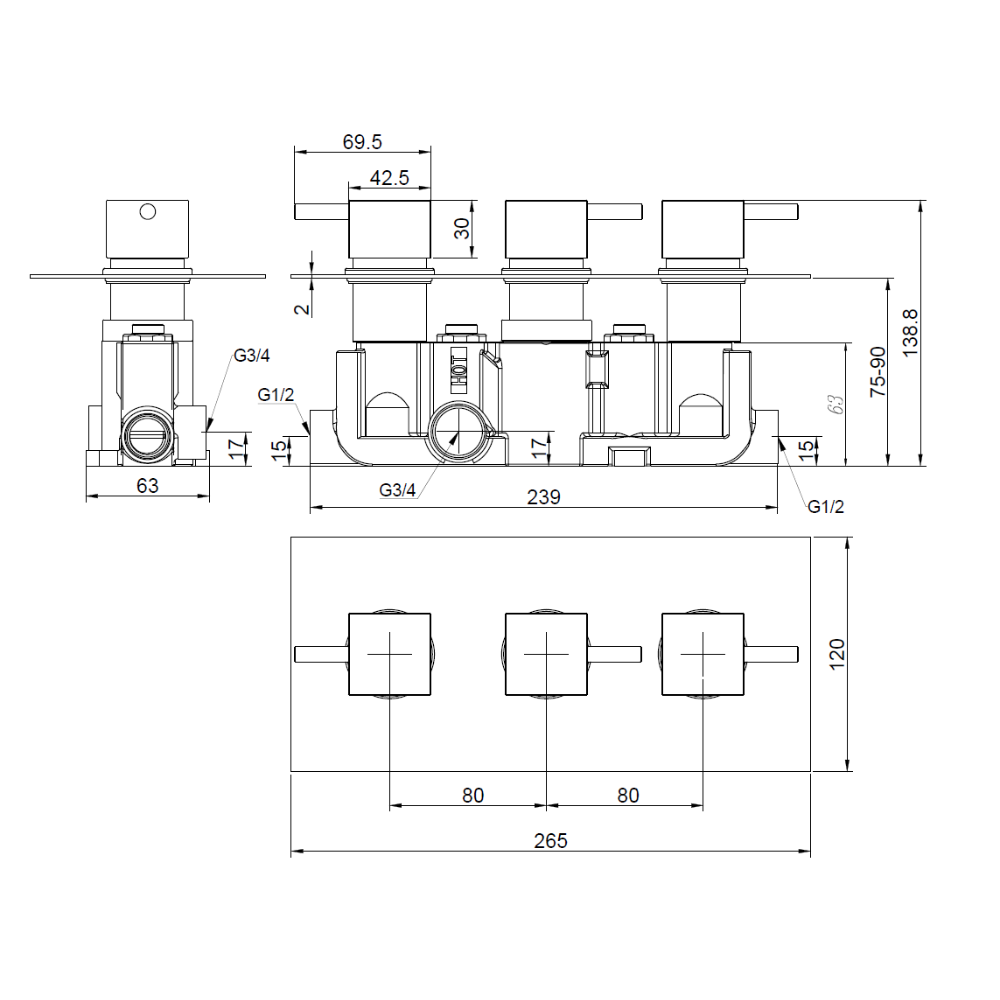
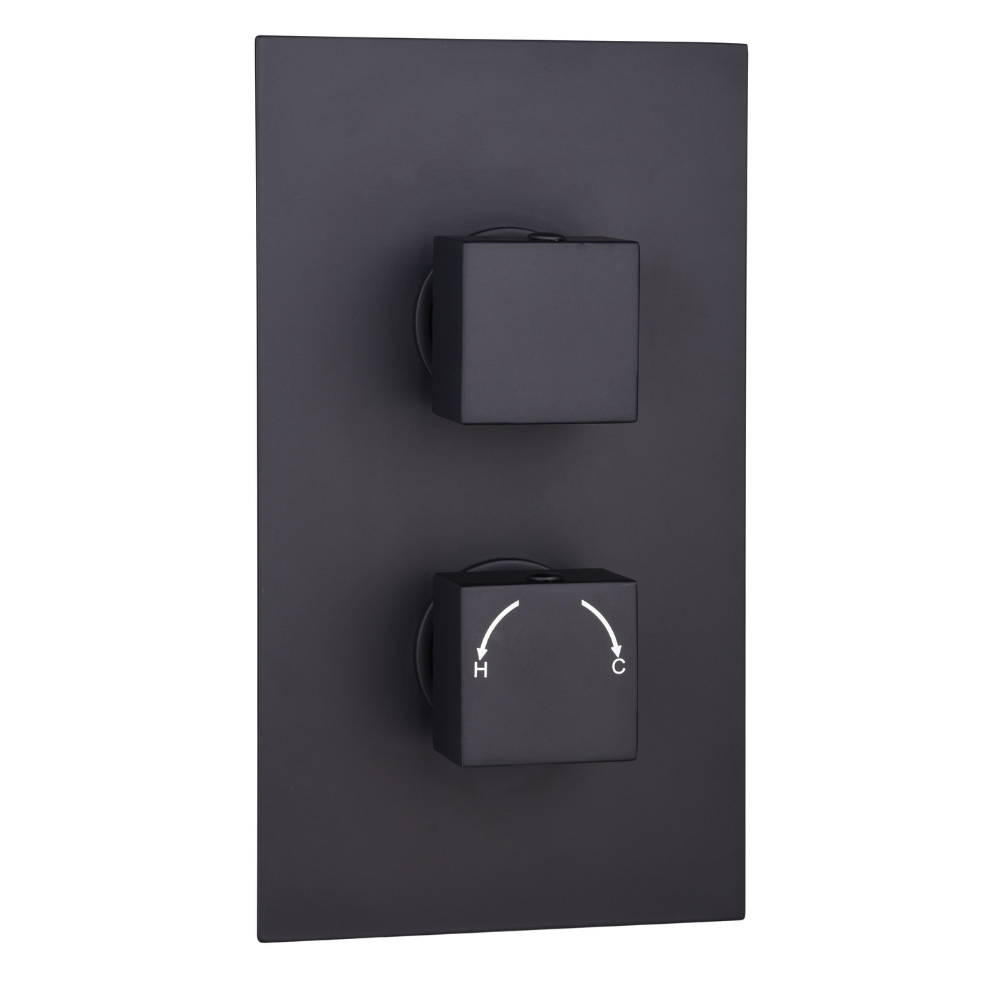
Work out your outlet count first. This is the decision that drives everything else. A single, one-outlet valve feeds one shower outlet, usually a fixed head or a handset on a rail, which is the simplest setup going: if you just want one good shower from one control, that is all you need. Two outlets let you run a pair and switch between them, the classic combination being a big fixed drencher overhead plus a handset for rinsing off and cleaning the enclosure. The Orca Matt Black 2 Handle 2 Outlet Thermostatic Concealed Shower Valve in square at £129 is a solid two-outlet valve for a matt black scheme, with solid brass construction, thermostatic control and a three-year guarantee. Three outlets add a third feed for body jets or a bath spout, which earns its place in a spa-style enclosure and is overkill if you are not planning one. A quick gut-check: count the things you want running off the shower (head, handset, jets, bath filler) and that is roughly your outlet count.
Thermostatic beats manual in a family bathroom. A thermostatic valve holds the temperature you set even when the pressure changes elsewhere in the house, so you are not blasted with cold, or scalded, when someone opens a tap or flushes the toilet. With a manual valve you ride those temperature swings yourself. Every valve picked out on this page is thermostatic, and both Orca valves and the brushed brass square also list built-in anti-scald protection.
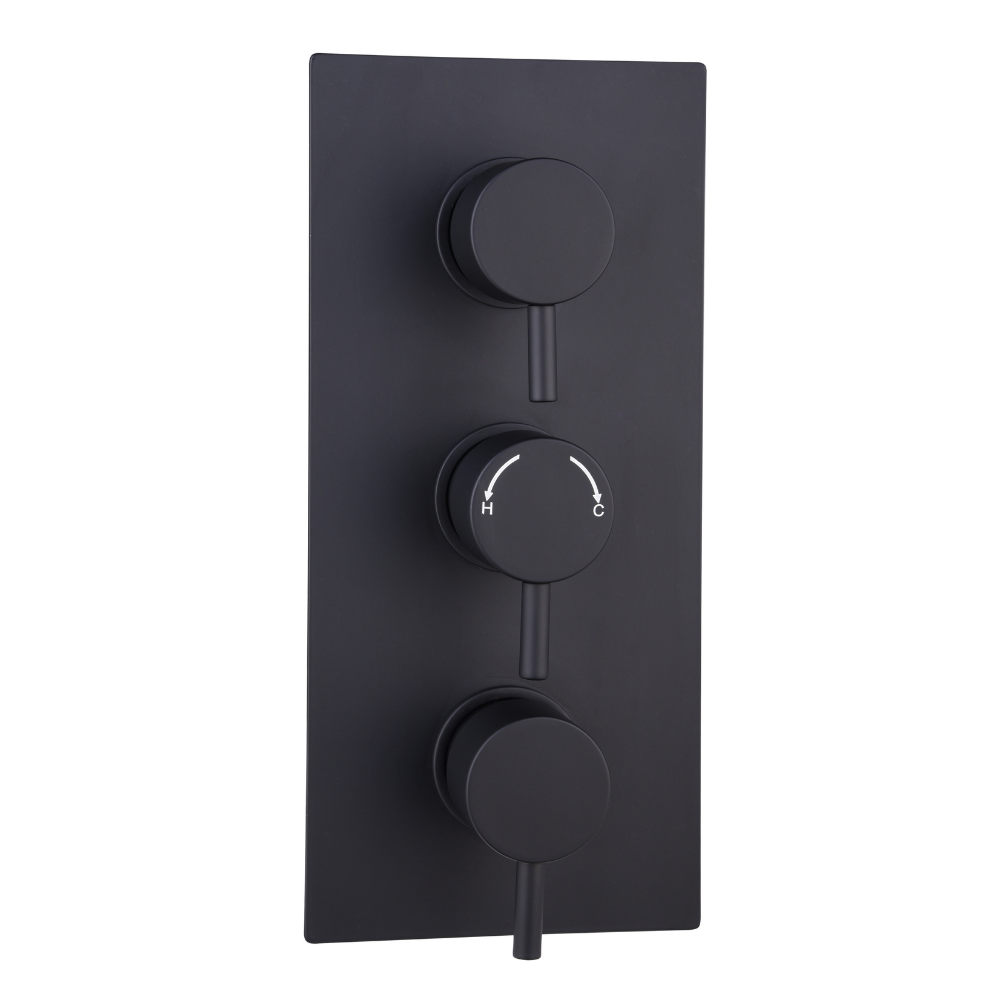
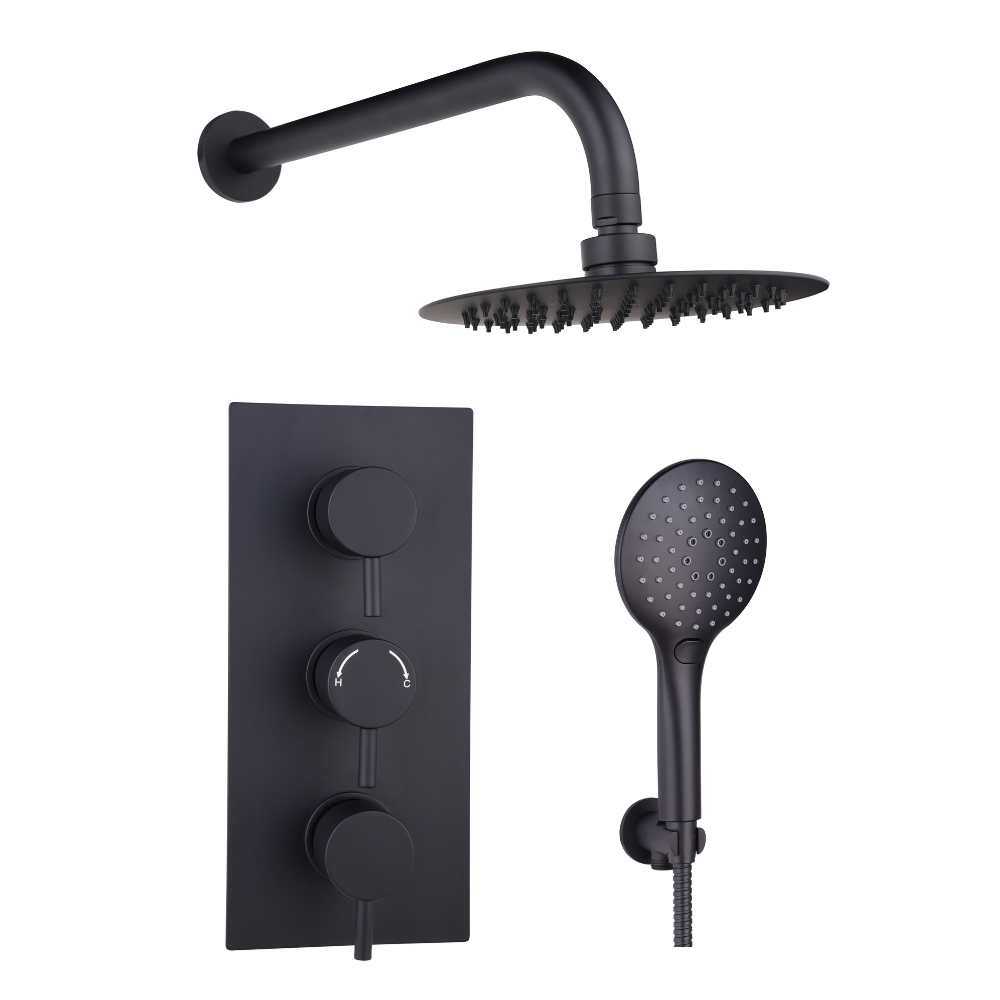
Handle count is not the same as outlet count. This is the easy one to trip on. A two-handle valve typically gives you one handle for temperature and one for flow, or for diverting between outlets. A three-handle valve adds a separate handle so you can control the outlets more independently, rather than leaving a single diverter to do the switching. The Orca Matt Black 3 Handle 2 Outlet Thermostatic Concealed Shower Valve in round at £159 shows the difference nicely: three handles, two outlets, so the extra handle buys you finer control rather than an extra feed. If you want to run both outlets at once (head and handset together, say) rather than one at a time, that is usually where the extra handle earns its place, but check the product page for whether the outlets can run together or only one at a time through a diverter.
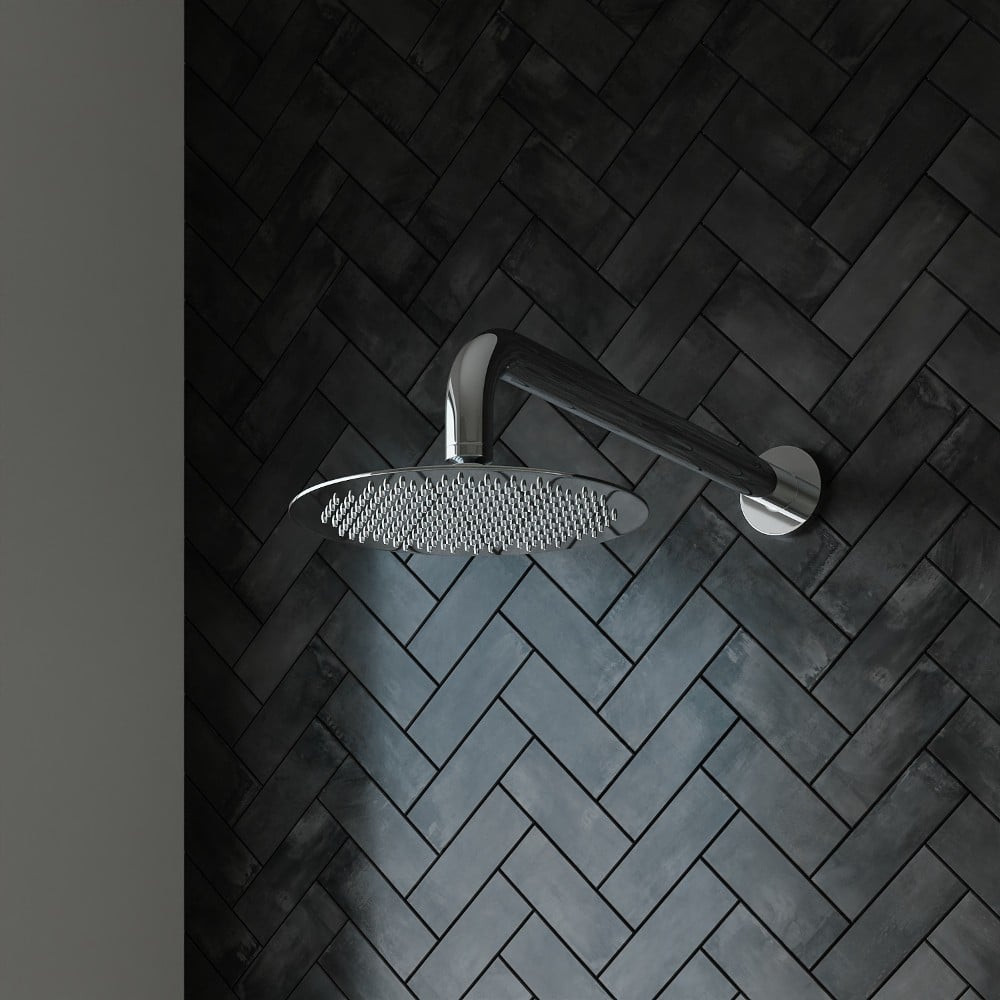
Valve only, or the full kit. Some of these listings are the valve on its own and some are a complete shower kit with the head and handset included, so read the title and the specification before you buy rather than discovering you need to order a head separately. If you would rather buy the lot as one matched set, the Litchfield Select Thermostatic Concealed Two Outlet Chrome Shower Valve at £119 comes with a 200mm stainless steel rainfall head on a 300mm arm and a handset on a 1.5m stainless steel hose, and it carries a five-year guarantee. That puts a complete two-outlet chrome shower at the same £119 as the brushed brass valve on its own, which is worth knowing before you assume the kit is the pricier route.
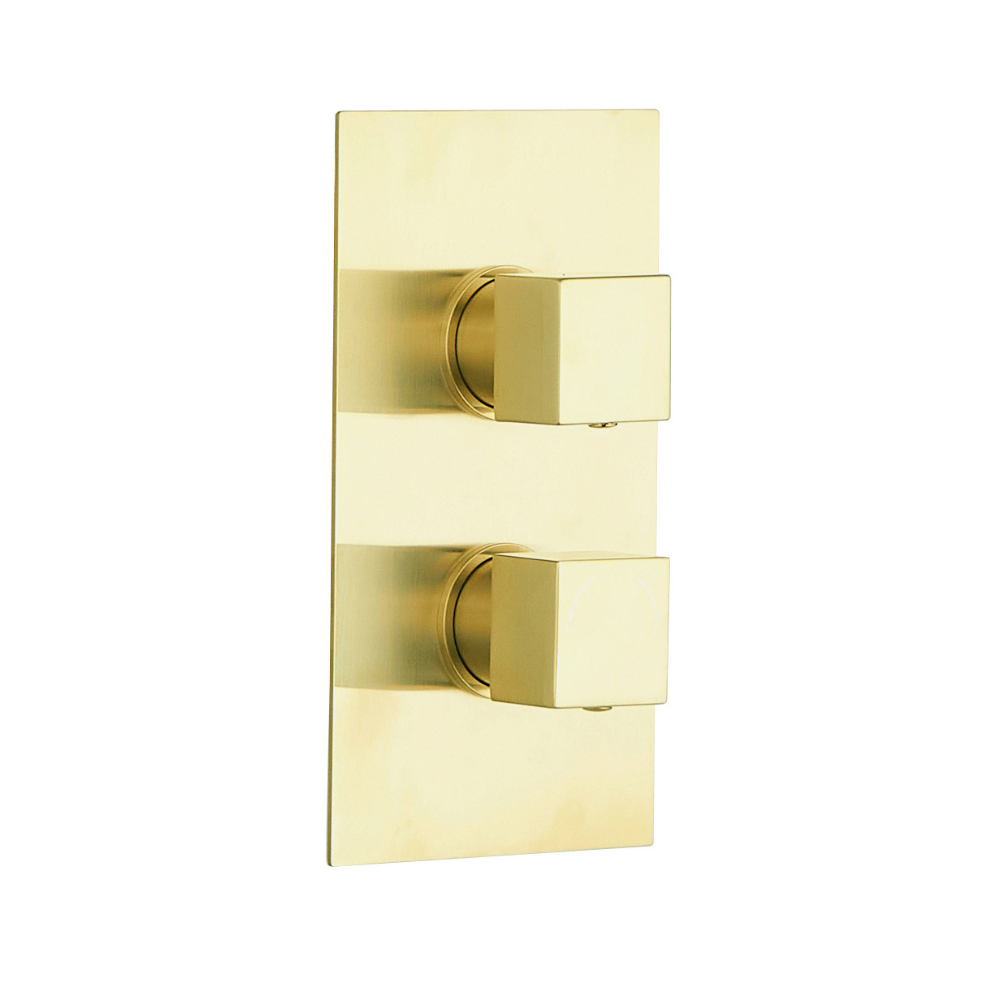
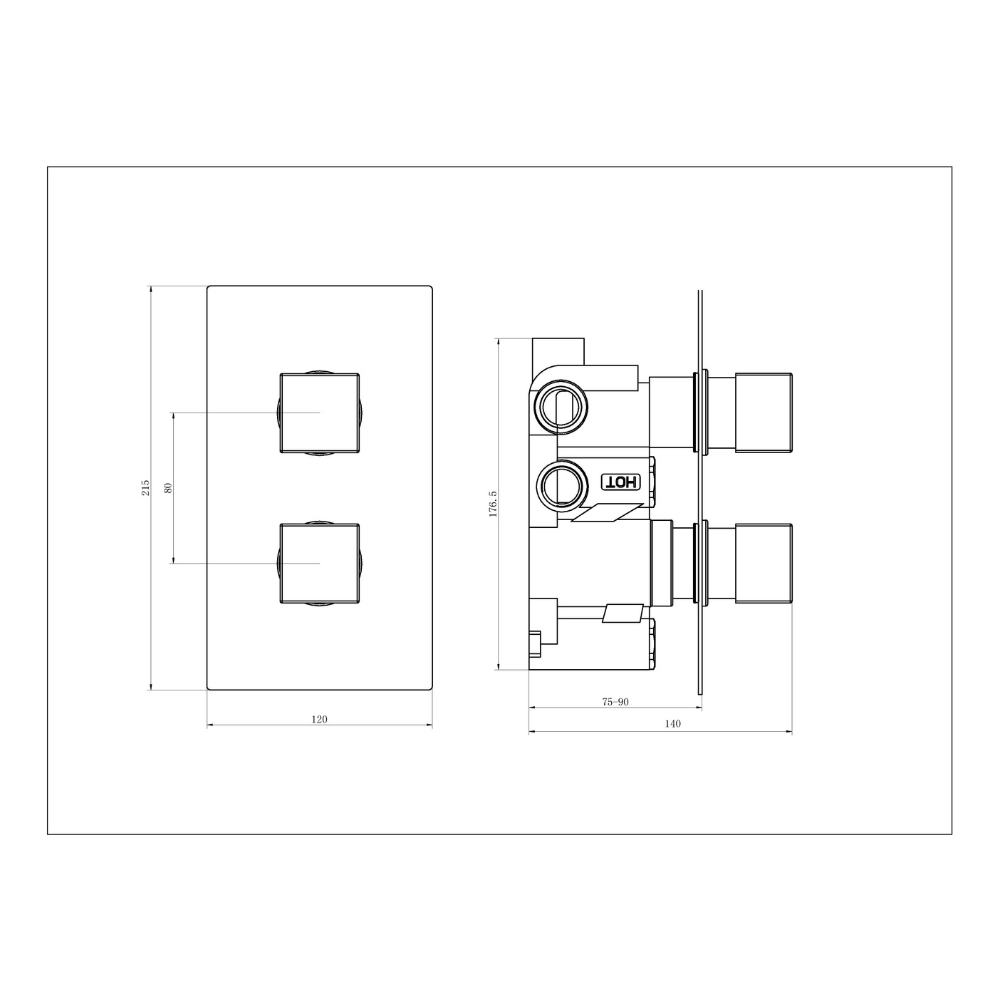
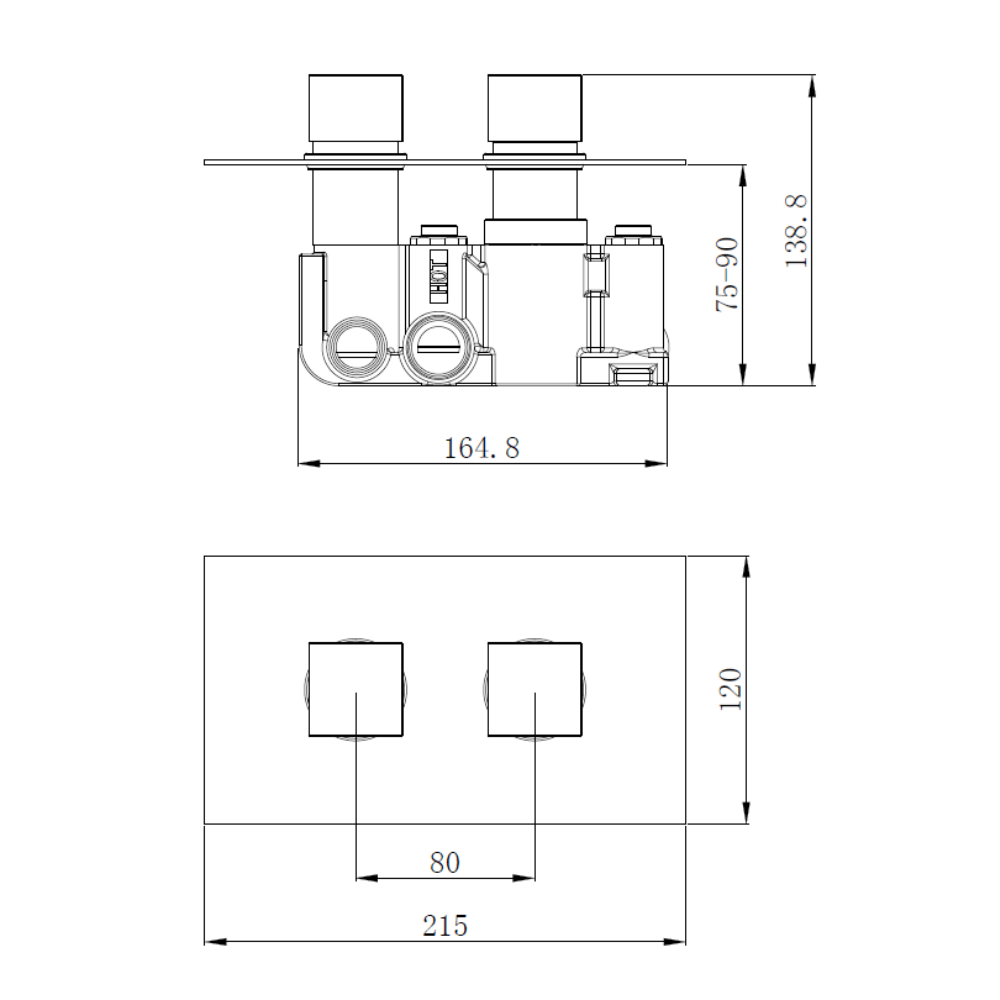
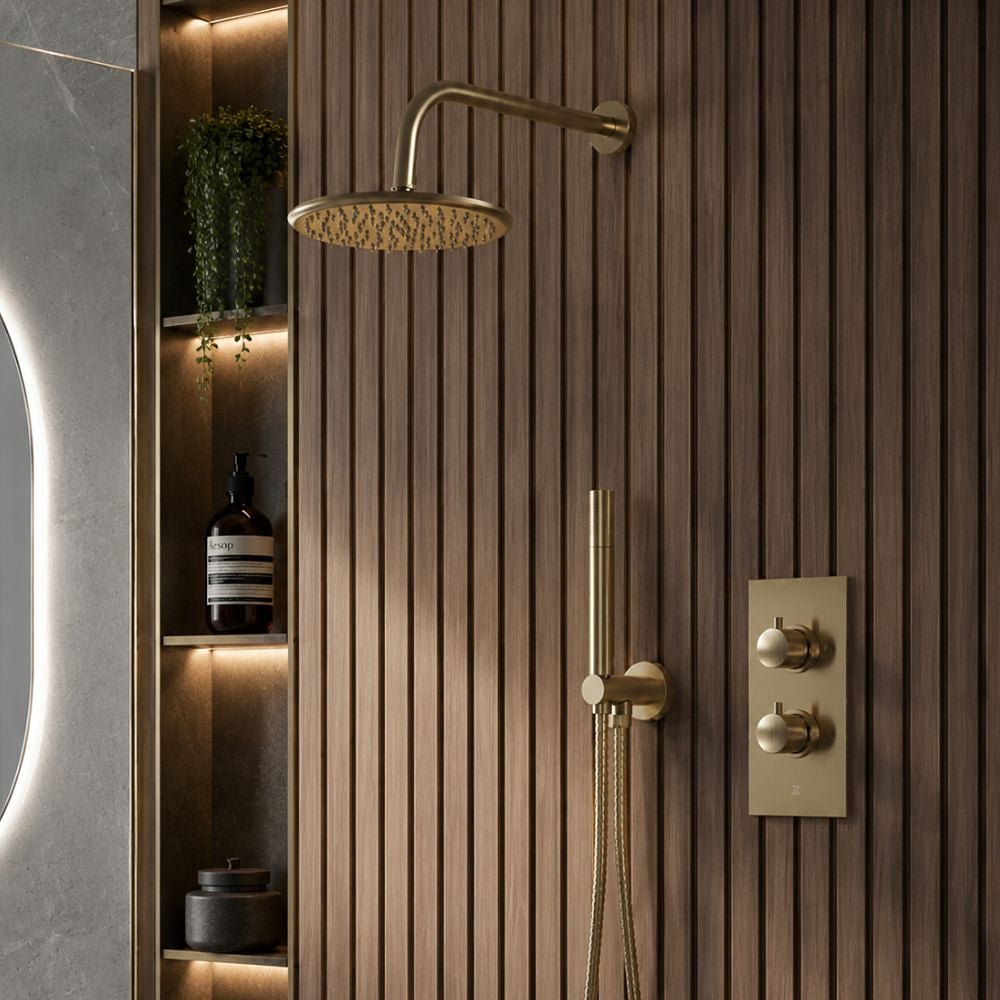
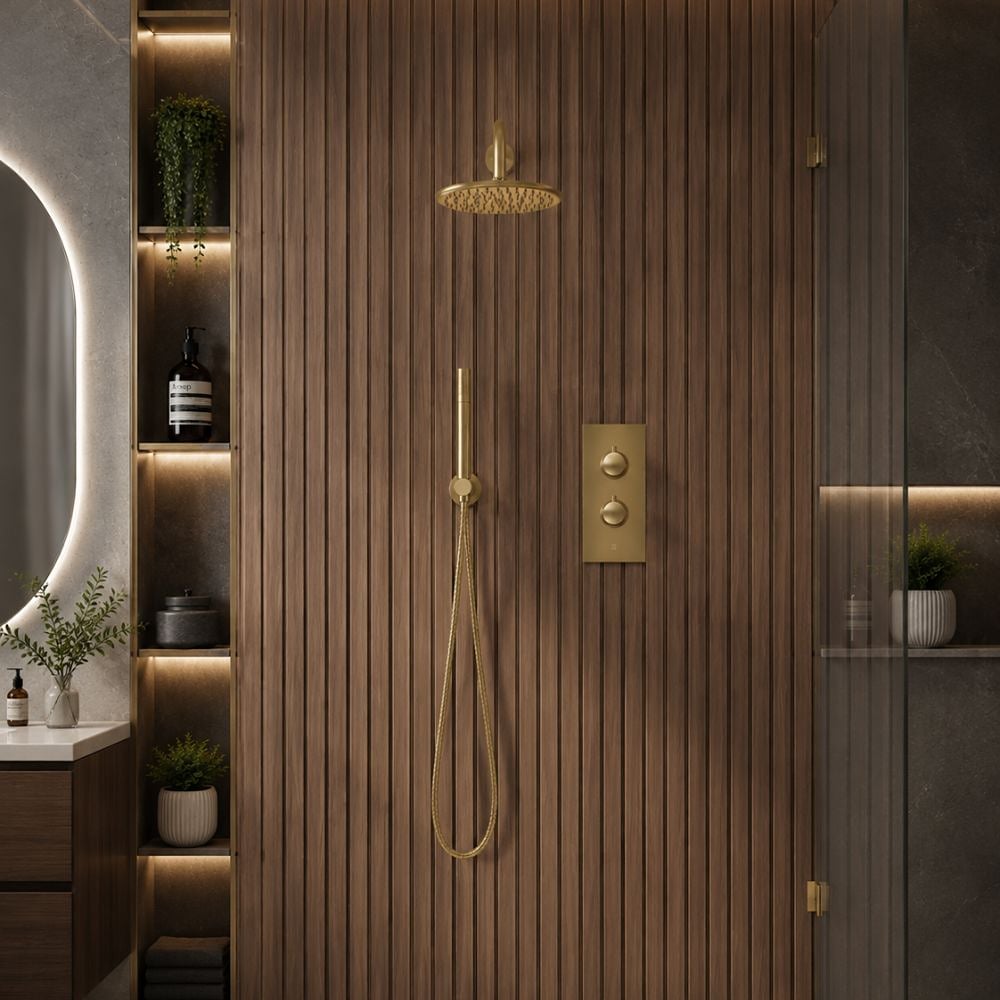
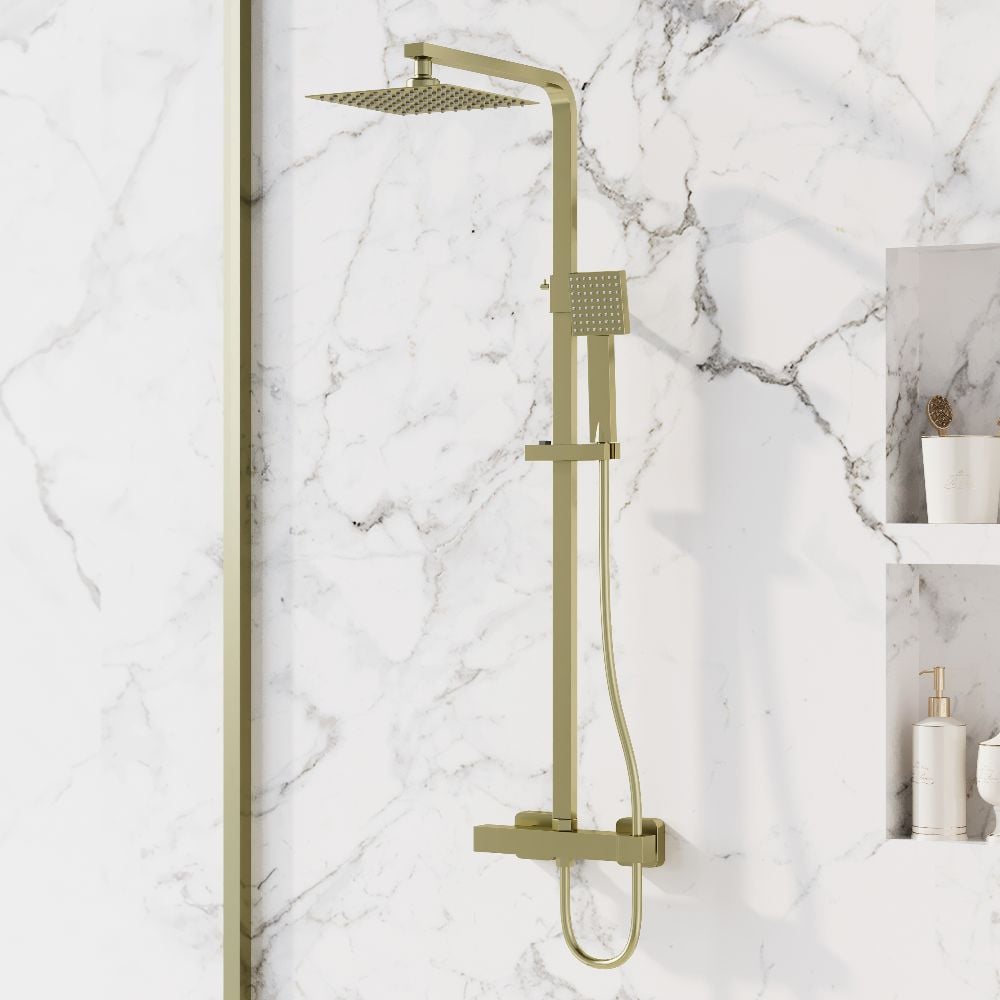
Shape and finish are purely a looks call. Square or round makes no difference to how the valve works, so match it to your other brassware and your tiling. Chrome is the safe all-rounder, matt black suits a modern monochrome scheme, and brushed brass is the warmer option. The Brushed Brass 2 Handle 2 Outlet Thermostatic Concealed Shower Valve in square at £119 is a valve-only route into the brass look, in solid brass with a three-year guarantee. Whatever finish you pick, try to keep the valve, the head and your taps in the same family so the room ties together: the full brushed brass shower range and the matt black shower range are worth a look if you are matching the rest of the kit to the valve.
Check your water pressure before you commit. This is the one people miss. Concealed thermostatic valves have a minimum operating pressure, and on a low-pressure gravity-fed system (the tank in the loft) a valve that needs more than your system can give may only dribble. If you are on a combi boiler or mains pressure you are almost always fine. Both Orca valves and the brushed brass square are rated for 0.5 bar to 5 bar, so if you are gravity-fed, that 0.5 bar floor is the figure to measure your system against. Whichever valve you are looking at, check its pressure rating on the product page against your own setup before you order.
What is a concealed shower valve? It is a shower control with the valve body hidden inside the wall, so the only thing on show is the handle (or handles) and the plate against the tiles. The pipework runs behind the wall instead of on the surface, which gives that clean, built-in look. The trade-off is that it is a more involved fit than a surface-mounted valve, because the body has to be recessed into the wall, so it suits a re-tile or a new build better than a quick like-for-like swap.
What does a 2 outlet shower valve do? A two-outlet valve feeds two shower outlets and lets you switch between them, most commonly a fixed overhead drencher and a handset on a rail. Depending on the valve you either run one at a time through the diverter or both together, so you can rinse off with the handset and still have the big head for everyday showering. If you only want one shower head, a single one-outlet valve is all you need.
Is a single outlet concealed shower valve enough? For most people, yes. If you are running one shower head or one handset and nothing else, a single outlet valve does the job with the simplest setup. You only need two or three outlets if you want to switch between, or run, more than one thing: a head plus a handset, or a head plus body jets or a bath filler.
Are these concealed shower valves thermostatic? The Orca square, the Orca round, the Litchfield Select chrome kit and the brushed brass square picked out above are all thermostatic, and the two Orca valves and the brass square also list built-in anti-scald protection. A thermostatic valve holds your set temperature even when the water pressure changes elsewhere in the house, so you are not scalded or frozen when a tap is opened or the toilet is flushed, which makes it the sensible choice for a family bathroom. Check the individual product page to confirm the valve you are looking at is thermostatic.
What water pressure do concealed shower valves need? It varies by valve, so check the one you are buying. Both Orca valves and the brushed brass square on this page are rated for 0.5 bar to 5 bar. Combi and mains-pressure systems are almost always fine, and on a gravity-fed system you want at least half a bar at the shower for any of those three.
What is the difference between concealed and recessed shower valves? Nothing, they are two words for the same thing. “Recessed” describes the valve being set back into the wall and “concealed” describes the body being hidden, and both mean the controls sit flush against the tiles with the pipework behind. If you searched for one or the other, you are in the right place.
Are concealed shower valves harder to fit than a bar valve? Honestly, yes, a bit. A surface-mounted bar valve bolts onto the wall and connects to the existing pipes, whereas a concealed valve has to be set into the wall with the feeds chased in behind it. That is straightforward as part of a re-tile or a new bathroom, but it is more work if you are swapping onto a finished, tiled wall. If you are not comfortable with that, it is a job for a plumber.
How much do concealed shower valves cost? Of the valves picked out above, prices run from £119 to £159. At £119 you can have either the valve-only Brushed Brass 2 Handle 2 Outlet square valve or the Litchfield Select chrome kit with the head and handset included, the matt black Orca square is £129, and the three-handle Orca round is £159. A full kit is not automatically the dearer option, so check exactly what is in the box before you compare prices.
£119.00
£119.00
£119.00
£119.00
£169.00
£169.00
£159.00
£159.00
£129.00
£129.00
Original price was: £289.00.£229.00Current price is: £229.00.
Original price was: £289.00.£229.00Current price is: £229.00.
Original price was: £279.99.£189.00Current price is: £189.00.
Original price was: £279.99.£189.00Current price is: £189.00.


Original price was: £349.00.£299.00Current price is: £299.00.
Original price was: £349.00.£299.00Current price is: £299.00.


Original price was: £289.00.£219.00Current price is: £219.00.
Original price was: £289.00.£219.00Current price is: £219.00.
Original price was: £189.00.£129.00Current price is: £129.00.
Original price was: £189.00.£129.00Current price is: £129.00.

Original price was: £329.00.£279.00Current price is: £279.00.
Original price was: £329.00.£279.00Current price is: £279.00.
Original price was: £199.00.£129.00Current price is: £129.00.
Original price was: £199.00.£129.00Current price is: £129.00.
Original price was: £389.00.£279.00Current price is: £279.00.
Original price was: £389.00.£279.00Current price is: £279.00.

Original price was: £229.00.£159.00Current price is: £159.00.
Original price was: £229.00.£159.00Current price is: £159.00.
Original price was: £219.00.£159.00Current price is: £159.00.
Original price was: £219.00.£159.00Current price is: £159.00.
Original price was: £299.00.£229.00Current price is: £229.00.
Original price was: £299.00.£229.00Current price is: £229.00.
Original price was: £99.99.£89.00Current price is: £89.00.
Original price was: £99.99.£89.00Current price is: £89.00.
Tag @bathroompoint to have your photos featured here!