Fog-Free Mirrors: How They Stay Clear and Which to Buy
Mirrors
A fog-free bathroom mirror stays clear because it is quietly warming itself. Behind the glass sits a thin heated pad, a demister, wired into the mirror’s electrics, and it keeps the surface warm enough that steam never turns to water on it. Hot shower steam meets warm glass instead of cold glass, so it does not fog. That is the version that actually works. Anti-fog sprays and stick-on films exist too, but they are a different game, and in a steamy UK bathroom only the heated sort reliably stays clear.
Here is the honest rundown: how each type works, whether you actually need one, the electrics on the heated kind, and which mirrors are worth buying. If your real problem is a room that fogs up badly every morning, the fix is partly the mirror and partly ventilation, and we cover the ventilation side in how to stop condensation on a bathroom mirror. This post is the buying decision: which mirror sorts it, and why.
- How a fog-free mirror stays clear
- Fog-free or demister: are they the same thing?
- Do you actually need a demister mirror?
- The three options compared
- Fitting a heated mirror: the electrics
- Which fog-free mirror to buy
- FAQs
How a fog-free mirror stays clear
Fog is just condensation. Warm, wet air from a shower hits a cold surface, the water in it turns back into tiny droplets, and those droplets scatter light so the glass looks misted over. Stop the glass being cold, or stop the droplets forming, and you stop the fog. There are three ways to do it, and they are not equal.
The heated demister pad (the one that works)
This is what sits inside a proper fog-free or demister mirror. A thin heated element, the pad, is bonded to the back of the glass and wired into the mirror’s circuit. Switch it on and it gently warms the mirror so the surface stays above the temperature at which steam condenses. The glass is warm before the steam arrives, so the water never gets a cold surface to cling to. No misting, nothing to wipe, and it clears the whole mirror evenly rather than leaving a hand-sized patch you keep smearing. Most heated mirrors are also LED-lit, and on many the pad comes on with the light or runs on a timer. Give it a few minutes before you get in the shower and the glass is clear when you step out.
Anti-fog coatings and films
A coating or a stick-on film works the opposite way. Instead of warming the glass, it changes how water behaves on it. The surface is treated so droplets spread out into one thin, see-through sheet rather than beading up into fog. It does clear the view, and there are no electrics involved, which is the appeal. The catch is that these coatings wear. Cleaning, wiping and daily steam all break the surface down over months, and once it goes patchy you are back to a foggy mirror or peeling a film off the glass. Fine as a stopgap, not something to rely on long term in a bathroom that steams up hard.
Anti-fog sprays
Same idea as a film, in a bottle. You wipe the spray onto clean, dry glass, buff it off, and it leaves an invisible layer that stops water beading for a while. Cheap, no wiring, works on any mirror you already own. But it lasts days to a couple of weeks at best, so you are back at the sink redoing it, and it is easy to miss a bit and get fog in a strip across the middle. It is the duct-tape answer: handy, not a fix.
The verdict: if you want a mirror that is genuinely clear every single morning with nothing to do, buy a heated demister mirror. Coatings and sprays are cheaper and need no electrician, but they fade, they need topping up, and they let you down on exactly the cold, steamy mornings you wanted them for. In a normal UK bathroom, the wired heated pad is the only one of the three that reliably stays clear.
Fog-free or demister: are they the same thing?
More or less, yes, and the different names cause real confusion. Search “fog-free mirror” and you land on one range; search “demister mirror” and you often land on the illuminated mirrors instead. That splits people up when they are chasing the same thing.
Here is the plain version. A demister pad is the mechanism. Fog-free, anti-fog, anti-steam, mist-free, demister: they are marketing words for a mirror that has that heated pad on the back. The reason “demister” so often shows up under illuminated mirrors is simple. Most mirrors that come with a demister pad are also LED mirrors, because you are already running electrics to the glass for the light, so adding the pad to the same wiring is the obvious move. So the two ranges overlap heavily.
What that means for buying: browse the fog-free mirrors range if you want mirrors sold specifically on staying clear, and browse the illuminated bathroom mirrors range if you want the light and the demister together, which is where most of the choice sits. Same technology behind the glass, two doors into it.
Do you actually need a demister mirror?
Not every bathroom does, so be honest about yours before you spend the money. A heated demister earns its keep when the room fogs faster than it can clear:
- Small or windowless bathrooms and ensuites. Less air, no window to crack open, so the steam has nowhere to go and the mirror mists in seconds.
- Poor ventilation. No extractor fan, or a weak one, means the moisture hangs around long after the shower is off.
- Cold-weather fogging. This is the big one. In winter the glass is colder, the shower is hotter, and the gap between the two is exactly what makes fog. A mirror that is fine in July mists over every morning from November on. A heated pad closes that gap.
When can you skip it? If you have a decent extractor fan or an openable window, a bigger bathroom, and you are not fussed about the mirror being clear the second you step out, a plain non-heated mirror plus good ventilation is genuinely fine, and cheaper. A demister mirror is not a substitute for airflow either. If the whole room streams with condensation, you have a ventilation problem that a warm mirror will not fix on its own. Sort the airflow first (that is what how to stop condensation on a bathroom mirror is for), then decide whether you still want the mirror to clear itself on top.
The three options compared
Same job, three very different products. Here is how they stack up.
| Option | How it works | Stays clear for | Electrics / fitting | Rough cost | Best for |
|---|---|---|---|---|---|
| Heated demister mirror | Warms the glass above condensation point so steam never settles | Every use, for the life of the mirror, nothing to top up | Needs wiring in by an electrician | From £119 for the mirrors below | Small, cold or poorly ventilated bathrooms and ensuites |
| Anti-fog coating or film | Makes droplets sheet out flat instead of beading into fog | Weeks to a few months, then it wears and needs redoing | None, stick on or wipe on any mirror | Low, one-off | A cheap stopgap on a mirror you already own |
| Anti-fog spray | Wipe-on layer that briefly stops water beading | Days to a couple of weeks per application | None, no fitting | Low, but you keep rebuying it | Occasional use, rentals, a quick fix |
Cost is rough on purpose: the spray and film prices move around and are worth checking at the till, and the mirror figure is the cheapest live price of the mirrors below at the time of writing, so confirm it on the product page before you order.
Fitting a heated mirror: the electrics
A heated demister mirror is a mains-wired electrical fitting, so it is not a hang-it-on-two-screws job like a plain mirror. The pad and the LED need a permanent connection, usually onto a fused spur on the bathroom lighting or mirror circuit rather than a plug, because there is no socket going near a mirror over a basin.
The thing to understand is that bathrooms are split into electrical zones based on how close you are to the bath or shower, and anything fitted in a zone has to be rated as safe for that spot, because it is a wet environment near water. A mirror over a basin still has to suit the zone it sits in. This is why it matters that you buy a mirror built for bathroom use, and why the connection is not a DIY job. Get a qualified electrician to wire it in and sign it off. It is a quick job for a spark, it keeps you the right side of the wiring regulations, and it means the demister and light are safe every time you switch them on.
On running cost: a demister pad draws very little power, and on most mirrors it only runs while the light or the demister is switched on, or on a short timer, so leaving it to warm the glass before a shower costs next to nothing. It is not something to worry about on the bill.
Which fog-free mirror to buy
All four below have a demister pad built in, so the choice is really about size, shape and whether you want storage with it. Prices are the cheapest live price at the time of writing.
For a straight, no-nonsense rectangular mirror, the Martha Matt Black LED Touch Mirror with Built-In Demister, £159, is the easy pick. It comes in a matt black finish, switched by a touch sensor, and it mounts either portrait or landscape, so it fits an awkward wall whichever way round you need it. Built-in demister pad, easy to install, and it comes with a 2 year guarantee.
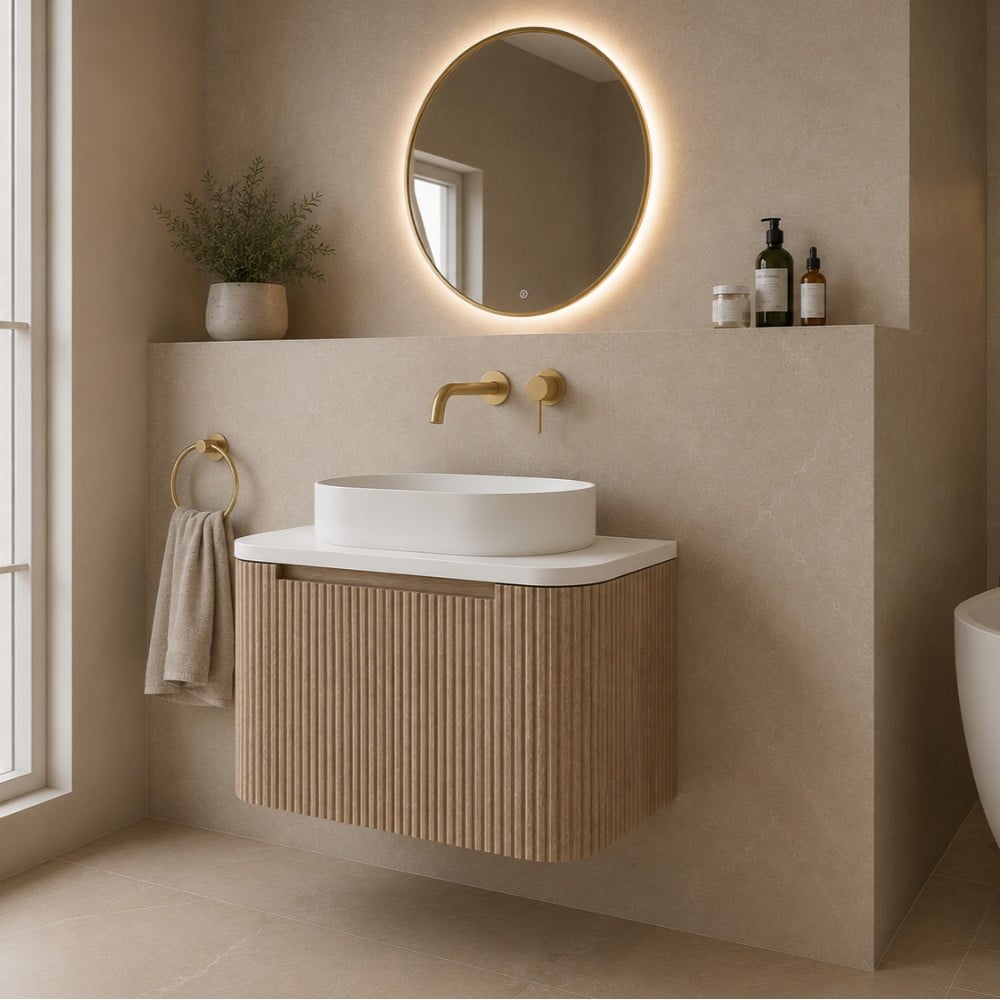
Want a round mirror to soften a boxy room? The Macie 600mm Round LED Mirror with Demister Pad, £119, is a matt black framed circle at a size that suits most modern bathrooms. It has colour-change lighting so you can flick between a cool white for shaving or make-up and a warmer tone, touch sensor control, and the demister pad keeps it steam-free. Good value for a framed round LED.
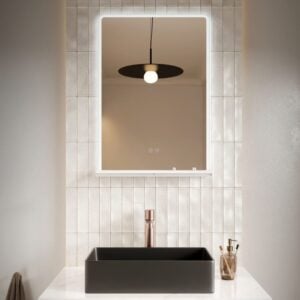
If you want a slim edged look rather than a chunky frame, the Aubrey 500 x 800mm LED Mirror, Matt Black, £119, has a sleek matt black edged frame, integrated LED lighting for an even, clear light, a built-in demister and a touch sensor. It is the same price as the Macie, so it comes down to whether you want a round frame or a slim rectangle.
Short on storage? Buy the fog-free feature and the cupboard in one. The LED Mirror Cabinet, 500 x 700mm, £259, has hands-free infrared sensor lighting, a built-in demister pad, an integrated shaver socket for a toothbrush or razor, plus a soft-close door and adjustable shelves to hide the clutter behind the mirror. For an ensuite where every centimetre counts, a cabinet that also stays clear is the smart buy. There is a wider choice in the full mirror cabinets range.
Still weighing up whether a cabinet or a plain mirror suits your wall? The illuminated mirror cabinet buying guide walks through sizing and features, and all about bathroom mirrors covers the wider range if you are not set on the heated kind yet.
FAQs
What is a fog free bathroom mirror?
It is a mirror with a heated demister pad bonded to the back of the glass and wired into its electrics. Switch it on and the pad gently warms the mirror so it stays above the temperature at which steam condenses, which means the glass does not fog when you shower. Most are LED-lit as well, and the terms anti-fog, anti-steam, mist-free and demister all describe the same thing.
Do anti fog mirrors actually work?
The heated ones, yes, reliably. A wired demister pad keeps the glass warm so steam never settles, and it works every time with nothing to top up. Anti-fog sprays and stick-on films also clear the view for a while, but they wear off and need redoing, so they let you down on cold mornings. If you want a mirror that is clear every day without any effort, buy the heated type.
What is the difference between a demister mirror and a fog free mirror?
There is no real difference. A demister pad is the heated element that keeps the glass clear, and fog-free is just the marketing name for a mirror that has one. The reason they show up under different ranges is that most demister mirrors are also illuminated, so they get listed with the LED mirrors, while others are sold specifically as fog-free. Same technology behind the glass.
Do you need an electrician to fit a demister mirror?
Yes. A heated mirror is a mains-wired fitting, usually connected onto a fused spur rather than a plug, and bathrooms have strict rules about electrics near water. A qualified electrician should wire it in and sign it off, so it is safe and meets the wiring regulations. It is a quick job for them, but it is not one to do yourself.
Is an anti steam mirror worth it?
In a small, cold or poorly ventilated bathroom, or an ensuite that fogs up in seconds, it is well worth it, because the mirror is clear the moment you need it with nothing to wipe. In a bigger bathroom with a good extractor fan or an openable window, a plain mirror plus decent ventilation does the job for less. Fix the airflow first, then decide if you still want the mirror to clear itself on top.