Wooden Vanity Units: Solid Wood, Veneer or Wood Effect?
Bathrooms
You can absolutely have the warm oak look in a bathroom, but the word “wooden” on a vanity listing almost never means a unit carved from solid planks. Most wooden vanity units are a wood-effect finish over a moisture-resistant board, and for a steamy bathroom that is usually the smarter build, not a cheat. This guide walks you up the material ladder from solid timber to veneer to foil-wrapped wood effect, shows you how to spot which one you are actually looking at in a product listing, and answers the question everyone quietly worries about: will it warp?
- What “wooden” really means: the material ladder
- Will a wooden vanity unit warp in a bathroom?
- How to look after a wooden vanity unit
- Oak finishes: sonoma, country and davos oak
- Which wooden vanity unit should you buy?
- FAQ
What “wooden” really means: the material ladder
Here is the thing nobody selling you a vanity says out loud: “wooden”, “oak” and “wood effect” cover three very different builds, at three very different price points. Get this straight and you will never overpay for a printed finish or feel short-changed by one either. There are broadly three rungs on the ladder.
- Solid timber. The carcass and doors are real wood, oak or similar, all the way through. Warmest look, most repairable, because a scratch is still wood underneath and can be sanded and re-oiled. It is also the heaviest, the priciest, and the fussiest in a wet room, because real wood moves with humidity. In bathroom furniture, true solid timber is rare and it commands a premium. If a listing does not say “solid oak” or “solid timber” in as many words, assume it is not.
- Veneer over board. A thin skin of real wood bonded to a stable core such as MDF or plywood. You get genuine grain on the surface for a lot less money, and because the core does not swell and shrink the way a solid plank does, it is actually better behaved in a bathroom than solid wood, as long as the edges are properly sealed. This is the middle rung and a sensible one.
- Foil-wrapped or melamine wood effect. The unit is built from board, then a printed foil or melamine layer that looks like wood grain is wrapped or pressed over it. No real wood in the finish at all. Cheapest, lightest, and honestly the most common thing you will find under “wooden vanity unit”. A good wrap looks convincing and shrugs off water. Chip the edge, though, and you see the board colour underneath, because the grain is printed, not grown.
How do you tell which one you are looking at? Read the wording, not the photo, because all three can look identical in a well-lit product shot. Hunt for the construction words: “solid”, “veneer”, “foil-wrapped”, “wood effect”, “laminate”. If the listing only gives you a colour, “oak”, “walnut”, “davos oak”, without one of those words, that colour is describing the look, not the material. Nine times out of ten that means a wood-effect wrap or a veneer rather than solid timber. None of these is the wrong answer. They are just different tiers of price, weight and durability, so match the build to how hard your bathroom gets used, and always check the specific product page before you buy. If you want to see the printed wood-effect tier side by side, the wood-effect furniture range is where those units live.
Will a wooden vanity unit warp in a bathroom?
Straight answer: a well-made one, looked after sensibly, will not. The warping horror stories almost always trace back to one of three things, and all three are avoidable.
The first is standing water. Board swells when water sits on a bare or chipped edge and soaks in, so the enemy is not steam in the air, it is a puddle left on the top or a drip running down an unsealed edge for weeks. Wipe splashes when you see them and you have solved most of it. The second is a knackered seal. Good bathroom furniture is built on a moisture-resistant board core and has its cut edges sealed at the factory, which is what keeps the damp out. Problems start when an edge gets chipped, or when someone drills into the carcass and leaves raw board exposed to the wet. If you drill it, seal the hole. The third is a bathroom that never dries out.
That last one is the big one, and it is about the room, not the vanity. A bathroom that stays wet for hours after every shower will punish any furniture, wood, wood effect or otherwise, along with the paint and the ceiling. Run the extractor for long enough to actually clear the air, crack a window if you have one, and do not drape wet towels over the unit. If your bathroom has no window and mists up badly, that is worth sorting on its own account, and our guide to preventing humidity in a bathroom without a window covers the ventilation fixes that keep furniture, walls and grout happy.
The quiet upside here is that a good wood-effect or veneered unit is genuinely more stable in a steamy room than solid oak, because the board core does not expand and contract with the seasons the way a solid plank does. So if warping is your worry, the printed or veneered finish you were tempted to look down on is often the safer buy. Wall-hanging the unit helps too, since it keeps the base off a wet floor, so a mopped floor never wicks up into the bottom of the carcass.
How to look after a wooden vanity unit
Care comes down to two rules, and they are the same whether your unit is solid, veneered or wrapped. Do not let water sit on it, and do not attack it with anything abrasive.
Daily wiping is the whole game. A quick pass with a damp cloth after you have splashed around the basin lifts toothpaste, soap and water spots before they dry on and before any of it finds a seam to creep into. Dry it off with the cloth rather than leaving it wet. That thirty seconds is what keeps a finish looking new for years, and it matters most around the basin and along the front edge where drips run.
What actually kills a wood or wood-effect finish is two things. Soaking is the first: a cloth so wet it leaves standing water, a leaking waste that drips inside the cupboard for weeks, a bath mat slapped wet against the base every day. The second is abrasives. Cream cleaners, scouring pads and gritty “bathroom” pastes dull a wood-effect wrap and cut through a thin veneer, and once you have sanded the shine off a printed finish there is no bringing it back. Skip them. Warm soapy water and a soft cloth do everything you need, and for a solid timber or oiled unit, a wood-safe polish or a re-oil once in a while keeps it fed. Bleach and harsh limescale removers are a no on any wood finish, so keep those for the loo, not the vanity.
Oak finishes: sonoma, country and davos oak
Oak is the look nearly everyone is after, and Bathroom Point lists it under a few finish names that trip people up because they sound like different woods when really they are different shades of the oak look. Here are the three you will meet most.
- Country oak is the warm, golden-brown, traditional oak most people picture when they say “oak”. It suits warmer schemes, brass and bronze taps, and older houses.
- Sonoma oak is a paler, light oak with a soft natural grain that reads more contemporary and Scandinavian. It works a treat with black or chrome taps and a minimal, modern room.
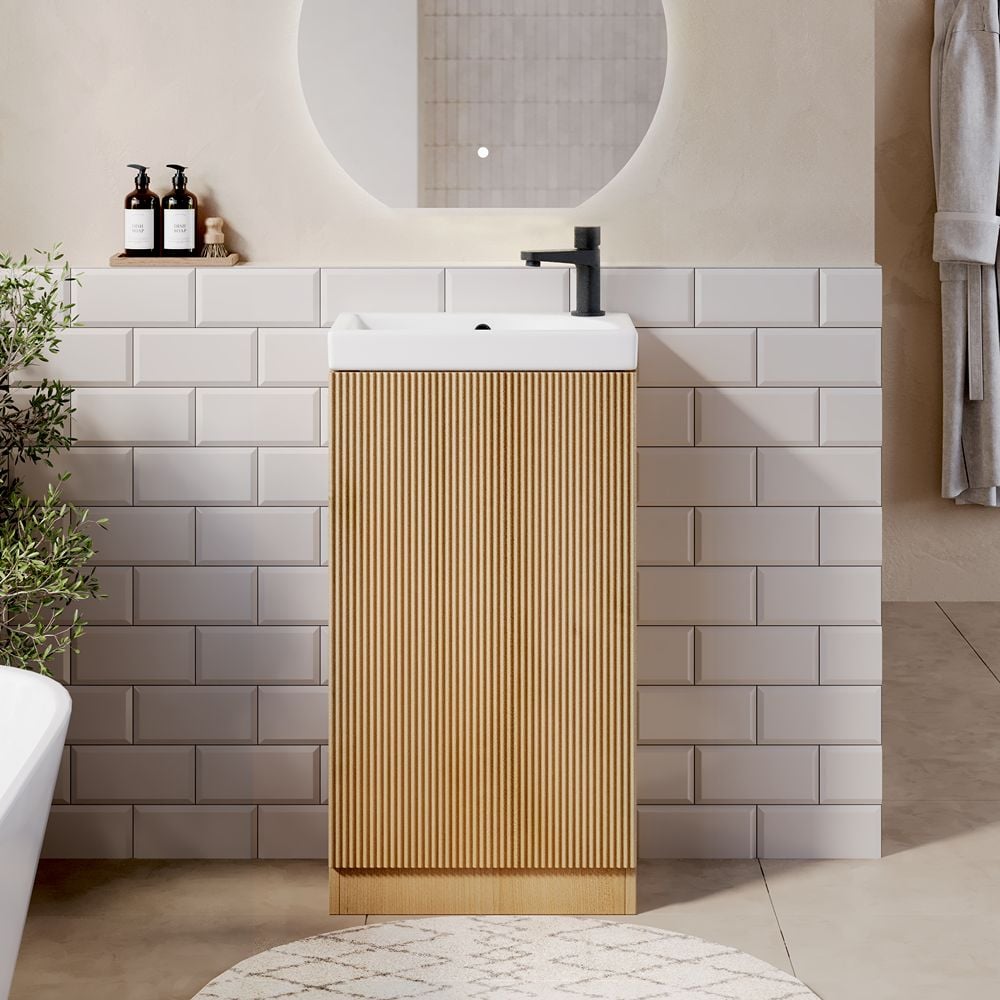
- Davos oak is the finish name on the Aubrey and Blake ranges. It is a light, natural oak tone, warm rather than grey, so it sits between the two above. Screens flatter every finish, so check the product photo for the shade in daylight before you commit.
The practical point is that these are finish names, not proof of construction. A “davos oak” or “sonoma oak” unit is telling you the colour and grain it imitates, not whether there is real timber under the surface, so read the material words separately as we covered up top. If you want to compare oak tones next to each other, browse the oak bathroom furniture range, and the wider bathroom furniture range shows the oak units alongside painted and gloss finishes if you are still weighing up the look. Oak has held its spot near the top of the finish charts for years, and our round-up of bathroom furniture trends shows where the warm-wood look sits against everything else if you are wondering whether it dates.
Which wooden vanity unit should you buy?
For most family bathrooms and ensuites, 600mm is the sweet spot: a proper basin and real storage underneath without the unit eating the room. Two here fit that band, in the two most-wanted oak tones.
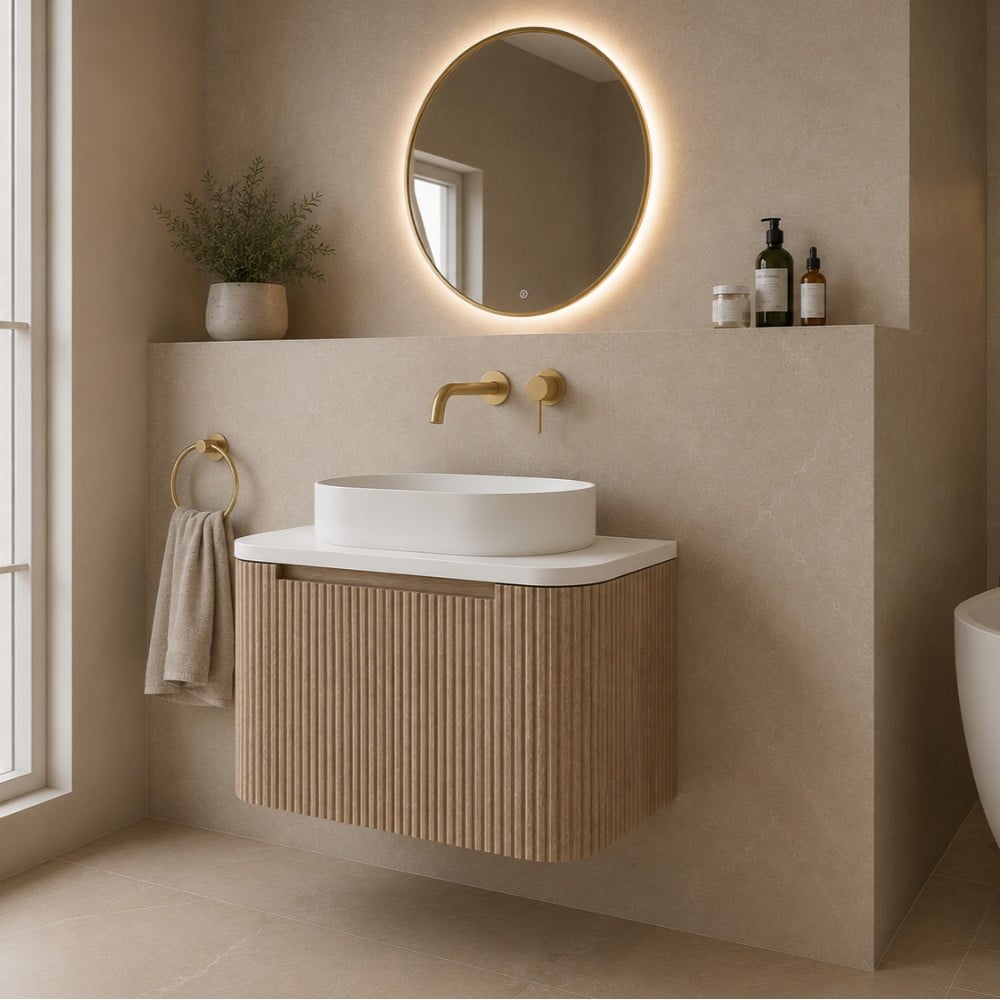
The Aubrey 600mm Davos Oak wall-hung vanity unit is the warm-oak pick at £349. It is 620mm wide and 460mm deep, hangs off the wall to keep the floor clear, and comes with soft-close drawers and sleek recessed handles. The nice touch is the optional handle colour: chrome, brushed brass, brushed bronze or gunmetal, so you can match it to your taps. The white inset basin is included, though the tap and waste are not, so budget those separately.
If you want the cooler, more modern oak with a bit of shape to it, the Linea 600mm wall mounted vanity unit in sonoma oak is £399. It is 500mm deep, wall mounted, with a curved front and a solid stone cast basin rather than a thin ceramic one. It also comes in black and reed green if the sonoma oak is not your colour, so it is worth a look even if you are not set on wood.
Doing a full loo or ensuite rather than just the basin? Match the vanity with the Blake 500mm WC unit in davos oak at £169. It hides the cistern and plumbing behind a back-to-wall toilet, stands about 900mm tall to conceal the lot, and arrives fully rigid so there is no flat-pack assembly. It comes with an uncut façade so you cut it to your own flush button, and its davos oak matches the Aubrey, so you get a coordinated basin-and-loo run without hunting for two finishes that agree.
FAQ
Is a solid wood vanity unit worth it?
Only if you specifically want real timber all the way through and you are prepared to pay for it and look after it. Solid oak looks and ages beautifully, and a scratch sands out because it is wood underneath. The catches are cost, weight, and the fact that solid wood moves with humidity, so it needs a well-ventilated bathroom and a bit of care. For most people a veneered or good wood-effect unit gives the same look for less money and behaves better in the steam. Check the listing wording: if it does not say “solid”, it almost certainly is not.
What is a wood effect vanity unit?
A wood-effect vanity unit is built from board and finished with a printed foil or melamine layer that imitates wood grain, rather than using any real timber on the surface. It is the most common and most affordable type, it is light, and a good one shrugs off bathroom damp better than solid wood does. The one weak spot is a chipped edge, which shows the plain board underneath because the grain is printed, not real. Wipe it down, avoid abrasives, and it lasts for years.
Can you get a teak vanity unit?
True teak, the dense oily hardwood used on boats and garden furniture, is not something you will find in most bathroom furniture ranges, and Bathroom Point does not stock a teak unit. When people search “teak vanity unit” they are usually after that warm, mid-to-dark honeyed wood tone rather than the timber itself. The closest look here is a warm oak such as country or davos oak, which gives you the same cosy, natural feel in a finish that is built for a bathroom. Shop by the tone you love, not the wood name.
Will a wooden vanity unit warp in a bathroom?
Not if it is well made and looked after. Warping comes from standing water soaking into a bare or chipped edge, a broken factory seal, or a bathroom that never dries out, and all three are avoidable. Wipe up splashes, seal any hole you drill, run the extractor properly and wall-hang the unit to keep it off a wet floor. A wood-effect or veneered unit on a moisture-resistant core is actually more stable in a steamy room than solid oak, so the printed finish is often the safer buy, not the risky one.
What is the difference between oak and wood effect?
“Oak” on a bathroom listing is usually describing a colour and grain, not the material. A wood-effect oak unit imitates oak with a printed finish over board, while a genuine oak unit uses real oak veneer or solid oak timber. They can look identical in a photo, so the difference is in the wording and the price. Look for “solid”, “veneer” or “wood effect” to know which tier you are buying, and check the product page rather than trusting the colour name alone.
Still deciding? Browse the oak bathroom furniture range for the warm-wood look, the wood-effect furniture range for the printed-finish tier, and if your bathroom mists up, sort the air first with our guide to preventing humidity in a bathroom without a window so whatever you buy lasts.